Rubenstein Says Renting Beats Buying as Build Costs Climb
Clear Investment Group's Amy Rubenstein told Bloomberg Businessweek Daily that rents should keep climbing and renting still beats buying, with construction costs the pivot of her argument.
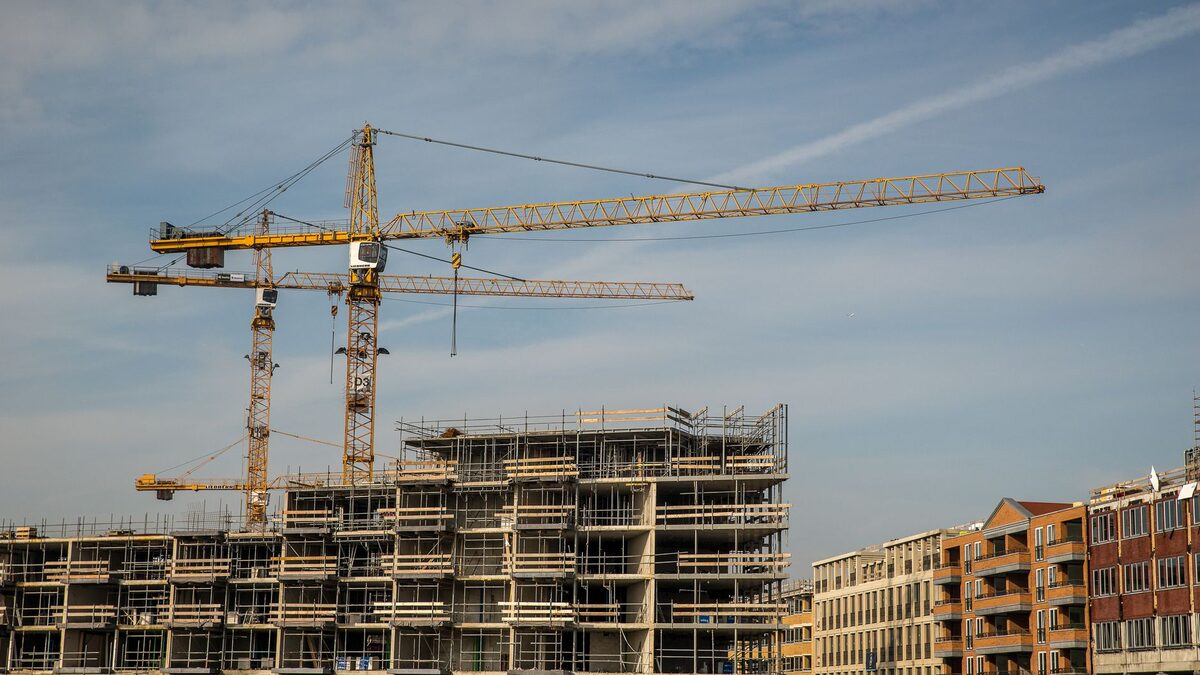
Clear Investment Group CEO Amy Rubenstein said on Bloomberg Businessweek Daily on Aug. 20, 2026 that she expects housing rents to keep rising and that apartment renting remains more affordable than buying a house for now, citing continued increases in construction costs.
Amy Rubenstein, chief executive of Clear Investment Group, used an appearance on Bloomberg Businessweek Daily on Thursday to make a claim that cuts against the usual framing of the U.S. housing debate: renting an apartment, she argued, is currently the more affordable option compared with buying a house, and rents are likely to keep rising from here. Her reasoning rests on one variable — construction costs, which she said continue to climb.
It is a short argument with long consequences. If building a new unit keeps getting more expensive, fewer units get built, and the rent on the units that already exist has room to move higher. That is the mechanism behind Rubenstein's forecast, and it is also the mechanism that keeps apartment owners interested in the sector even when the broader market is having a bad day. The remarks were made in a video segment carried by Bloomberg Markets.
Why construction costs sit at the center of the rent argument
Construction cost is the hinge because it sets the rent a developer needs in order to justify breaking ground. When materials, labor and financing push the total cost of delivering a unit higher, the rent required to earn an acceptable return rises with it. Projects that do not clear that threshold get shelved. The result is a thinner pipeline of new supply arriving in two or three years' time — and existing landlords facing less competition for tenants.
That is the supply side of Rubenstein's case. The demand side is the mirror image of it: if a household cannot buy, it rents. Rubenstein's contention that renting is cheaper than owning "for now" is a statement about monthly outlay, not about long-term wealth building. Ownership carries a mortgage payment, property taxes, insurance and maintenance; a lease carries rent and, in most cases, some utilities. When the ownership bundle rises faster than the rent bundle, the rent-versus-buy calculation tips toward leasing — and it tips for a broad band of middle-income households at once.
What the argument does not settle
Rubenstein made a directional call, not a quantified one. She did not, in the remarks summarized by Bloomberg, put a percentage on future rent growth, name a market, or specify a time horizon beyond "for now." Investors should treat it as it was offered: the view of an operator whose business is buying and running apartments, describing the conditions she sees in her own asset class.
Two things could unsettle it. The first is a break in construction costs. Cost pressure is not a permanent state; if input prices ease, the arithmetic that currently blocks projects can unblock quickly, and a wave of deliveries into a single metro area has repeatedly proved capable of flattening asking rents there. The second is household income. Rents can only rise as far as tenants can pay. Rent growth that outruns wage growth for long enough runs into hard limits — delinquency, doubling up, moves to cheaper submarkets — and those limits show up in an owner's numbers as vacancy and concessions rather than as headline rent.
There is also the policy channel. Rising rents in a visible, politically sensitive category invite responses: rent stabilization measures, tenant protections, zoning changes designed to force supply. Any of those alters the return an apartment owner can expect without altering construction costs at all.
Where the listed apartment trade sits against a soft session
Rubenstein's firm is private, so there is no share price to read her view through directly. The publicly traded apartment landlords — the residential real estate investment trusts, or REITs, companies that own rental property and pass most of their taxable income to shareholders as dividends — are the usual proxy, and their appeal in a high-cost-to-build environment is straightforward: assets already standing become more valuable when replacing them costs more.
Rubenstein's firm is private, so there is no share price to read her view through directly.
That logic, however, competes with the interest-rate channel, and Thursday's tape was not friendly. As of the last trade at 20:00 GMT on Aug. 20, 2026, the S&P 500 tracker (NYSEARCA: SPY) was at $762.78, down 0.82% from a previous close of $769.06, and sitting near the bottom of a $762.04–$768.15 day range. The Nasdaq 100 proxy (NASDAQ: QQQ) was $710.91, off 0.72% from $716.08. The Dow tracker (NYSEARCA: DIA) took the worst of it at $527.59, down 1.25% from $534.27 and effectively pinned at the low end of its $527.20–$531.78 range.
A broad, all-three-benchmarks-lower session of that shape matters to the housing argument for a specific reason. Rate-sensitive, income-paying assets — REITs among them — tend to trade on the discount rate applied to their cash flows as much as on the cash flows themselves. Rubenstein can be right about rents and apartment REIT shares can still fall, if the market repricing is happening in the bond market rather than in the leasing office. The two claims are not in conflict; they answer different questions.
What to watch from here
Three markers will test the call over the next several quarters, and none of them requires a forecast to follow:
- Construction starts and permits. If Rubenstein's cost premise holds, multifamily starts should stay constrained. A visible pickup would signal that costs have eased and that supply relief is coming.
- Concessions in new leases. Free months and waived fees are where softening shows up before headline asking rents move. Watch the incentive, not the sticker.
- The gap between rent growth and wage growth. That spread is the affordability ceiling. When it widens too far for too long, rent growth stops being a story about pricing power and becomes a story about collections.
For renters, the practical takeaway from Rubenstein's framing is uncomfortable but useful: the affordability advantage she describes is a comparison, not a discount. Renting looking cheaper than buying is compatible with rent itself getting more expensive every year — and on her reading of construction costs, that is the direction of travel.
For investors, the sector question is whether replacement-cost scarcity is already in the price of listed apartment owners. Thursday's broad decline across all three major U.S. benchmarks is a reminder that in rate-driven markets, a sound operating thesis and a falling share price can coexist for a long while.
Key facts
- Who spoke: Amy Rubenstein, CEO, Clear Investment Group, on Bloomberg Businessweek Daily
- The call: Rents to keep rising; renting an apartment more affordable than buying a house for now
- Stated cause: Construction costs continuing to rise
- Market backdrop (20:00 GMT, Aug 20, 2026): SPY $762.78 (-0.82%); QQQ $710.91 (-0.72%); DIA $527.59 (-1.25%)
Frequently asked questions
What exactly did Amy Rubenstein say?
Speaking on Bloomberg Businessweek Daily on Aug. 20, 2026, the Clear Investment Group chief executive said she expects housing rents to keep rising, and that apartment renting is currently more affordable than buying a house. She attributed the dynamic to construction costs that continue to increase. She did not give a percentage forecast or a timeframe.
Why would rising construction costs push rents higher?
Construction cost sets the rent a developer must achieve to justify building. When materials, labor and financing get more expensive, more projects fail that test and get shelved. Less new supply arrives in later years, leaving existing apartment owners with less competition for tenants — and more room to raise rents on the units already standing.
Does 'renting is more affordable' mean renting is cheap?
No. It is a comparison between two monthly outlays, not a statement that rent is low. Ownership carries a mortgage, property taxes, insurance and maintenance; renting carries rent and often some utilities. Rubenstein's point is that the ownership bundle is currently the more expensive of the two — which is fully compatible with rents themselves still rising.
Can investors trade this view through Clear Investment Group?
Not directly. Clear Investment Group is a private firm with no listed shares. Investors seeking exposure to the thesis typically look at residential real estate investment trusts — REITs that own rental housing and distribute most taxable income as dividends — though those shares also move heavily with interest rates, independent of rent trends.
What was the stock market doing when she made the remarks?
All three major U.S. benchmarks were lower. As of the last trade at 20:00 GMT on Aug. 20, 2026, the S&P 500 tracker SPY was $762.78, down 0.82%; the Nasdaq 100 proxy QQQ was $710.91, down 0.72%; and the Dow tracker DIA was $527.59, down 1.25% and near its session low of $527.20.
What would prove the rent forecast wrong?
Two developments would undercut it. First, an easing in construction costs, which would unblock stalled projects and eventually deliver new supply that can flatten asking rents in individual metro areas. Second, rent growth outrunning wage growth for long enough that tenants cannot pay — which shows up as vacancy, concessions and delinquency rather than higher rents.
Sources
- CIG's Rubenstein Expects Housing Rents to Keep Rising — Bloomberg Markets
Photo: Mike van Schoonderwalt · Pexels Licence — source