Micron's $50 Billion Boise Buildout Tests a City's Limits
Micron's $50 billion memory-fab expansion in Boise is creating jobs and wealth in its hometown while squeezing housing and roads. MU traded at 957.49, up 2.18%, on August 20.
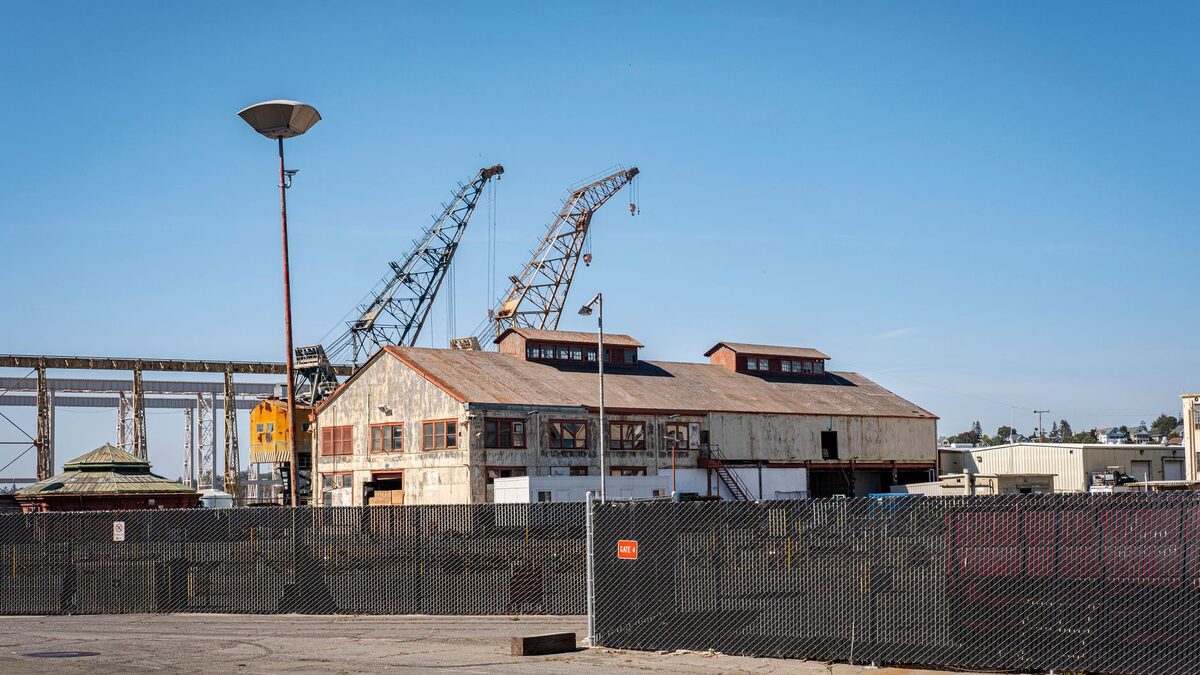
Micron is spending $50 billion on a memory-chip manufacturing expansion in its hometown of Boise, Idaho, an AI-driven buildout that is adding jobs and wealth while straining local housing, traffic and civic identity, according to CNBC.
A single company is now large enough to redraw the map of a mid-sized American city. Micron Technology (NASDAQ: MU) is pouring $50 billion into a manufacturing buildout in Boise, Idaho — the city where it was founded and still keeps its headquarters — and the consequences are showing up far outside the fence line of the fab campus: in home prices, in commute times, and in arguments about what kind of place Boise wants to be.
The scale is the story. Fifty billion dollars is the kind of number normally attached to a national infrastructure program, not to one employer's capital plan in a metro area of Boise's size. It is being spent because artificial intelligence has transformed the economics of memory. High-bandwidth memory and advanced DRAM are no longer commodity components sold into cyclical PC and handset markets; they are gating items for AI accelerators, and buyers are queuing.
What the market is paying for a memory supplier right now
Micron shares changed hands at 957.49 as of 16:30 GMT on August 20, 2026, up 2.18% on the day from a previous close of 937.11, with an intraday range of 929.07 to 964.40. That gain came on a session where the broad market was heading the other way: the S&P 500 tracker (SPY) was at $765.78, down 0.43%, the Nasdaq 100 tracker (QQQ) at $711.85, down 0.59%, and the Dow tracker (DIA) at $529.72, down 0.85%.
Divergence of that kind — a semiconductor name up more than two percent while every major benchmark is red — is the market's shorthand for a company whose demand picture is being priced on its own terms rather than on the macro tape. It is also, indirectly, the market's endorsement of the capital spending. Fabs of this size are only rational if the buyer base is durable, and investors bidding the stock up on a down day are signaling they believe it is.
Why $50 billion lands harder in Boise than it would in Phoenix or Austin
Chip megaprojects have gone up across the American Sun Belt in recent years, but most have landed in metros with deep construction labor pools, sprawling suburban housing stock and highway networks built for millions. Boise has none of those at the same scale. That is precisely why the effects the source describes — housing pressure, traffic, a contested sense of civic identity — are sharper there.
The mechanics are familiar to anyone who has watched a boom town. Construction crews arrive first, in the thousands, and they need somewhere to sleep before a single wafer is produced. Then come the permanent technical staff: process engineers, equipment technicians, facilities specialists, most of them earning well above the local median. Landlords and sellers respond to the higher bid, and the households already there — teachers, nurses, service workers, retirees on fixed incomes — compete against it without the pay increase.
The wealth effect is real and unevenly distributed. Long-time homeowners see paper gains. Renters see rent reviews. Local suppliers, contractors and restaurants see revenue they could not have modeled five years ago. The infrastructure — roads, water, schools, power — is funded on a slower political clock than the corporate capex schedule, which is the structural reason boom towns feel chaotic even when the boom is a genuine windfall. CNBC reported the buildout's local effects in detail.
The tension between a hometown headquarters and a global supply chain
Micron's decision to concentrate this much capacity in Boise is not sentimental, but the hometown connection is not irrelevant either. Keeping leading-edge memory fabrication next to headquarters and existing research operations shortens the distance between a process problem and the people who can fix it. It also concentrates risk: a single metro area now carries an outsized share of the company's advanced manufacturing footprint, and the company carries an outsized share of the metro's economic destiny.
Micron's decision to concentrate this much capacity in Boise is not sentimental, but the hometown connection is not irrelevant either.
That is a two-way dependency. If AI memory demand stays as tight as the current order book implies, Boise gets a decade of construction employment followed by a permanent high-wage industrial base. If the memory cycle turns — and memory has always been the most brutally cyclical corner of semiconductors — the city absorbs the downturn in a way a more diversified economy would not.
What to watch as construction moves through its phases
Several markers will tell you whether the buildout is tracking to plan and whether Boise is absorbing it.
- Phasing of the capex. The $50 billion is a program total, not a single-year outlay. How much lands in any given fiscal year determines both Micron's free cash flow profile and the local construction headcount at any moment.
- Permanent versus construction hiring. The two create very different housing demand. Construction labor is largely transient; fab technicians buy houses and enroll children in schools.
- Housing supply response. Whether Boise's permitting and homebuilding pipeline can add units fast enough to absorb the in-migration is the single biggest determinant of whether the boom feels like prosperity or displacement.
- Memory pricing. The entire investment case rests on AI-driven demand holding DRAM and high-bandwidth memory pricing above the levels that made previous cycles so punishing.
- Public infrastructure funding. Roads, water and power upgrades are financed on municipal timelines. Gaps between corporate and civic schedules are where the friction shows.
The wider pattern this fits
The reshoring of advanced semiconductor manufacturing to the United States has been a policy goal for years, and the projects are now big enough to be visible in local statistics rather than only in press releases. Boise is a compact test case for whether the model works socially as well as industrially. A metro that hosts a $50 billion industrial program will find out quickly whether its housing market, its labor market and its politics can flex at the same pace as a company responding to AI demand.
For investors, the read-through is straightforward: capital expenditure of this magnitude is a statement of conviction about multi-year demand, and the stock's outperformance on a down day suggests the market currently shares it. For Boise, the calculus is longer and less liquid. Cities cannot rebalance a portfolio.
Key facts
- MU share price: 957.49, +2.18%, as of 16:30 GMT Aug 20, 2026
- Buildout value: $50 billion in Boise, Idaho
- MU day range: 929.07 – 964.40 (prev close 937.11)
- Market backdrop: S&P 500 (SPY) $765.78, -0.43%; Nasdaq 100 (QQQ) $711.85, -0.59%
Frequently asked questions
How much is Micron spending in Boise?
Micron is undertaking a $50 billion buildout in Boise, Idaho, the city where the company was founded and where it is headquartered. The figure is a program total covering advanced memory manufacturing capacity rather than a single year's capital expenditure, and construction is being driven by AI-related demand for memory chips.
How did Micron stock trade on August 20, 2026?
Micron shares traded at 957.49 as of 16:30 GMT on August 20, 2026, up 2.18% from a previous close of 937.11, with an intraday range of 929.07 to 964.40. The gain came while all three major US benchmark trackers were lower on the day.
Why is AI driving Micron's expansion?
Artificial intelligence workloads require large volumes of high-performance memory alongside processors. That has shifted demand for DRAM and high-bandwidth memory away from traditional PC and smartphone cycles toward data-center buildouts, giving memory suppliers a demand profile strong enough to justify very large multi-year manufacturing investments.
What problems is the expansion causing in Boise?
According to CNBC's reporting, the buildout is adding pressure to housing, traffic and the city's sense of identity. Construction crews and higher-paid permanent staff increase competition for a limited housing stock, while road and utility upgrades are funded on slower municipal timelines than corporate construction schedules.
Is Boise economically dependent on Micron?
The concentration of a $50 billion industrial program in one mid-sized metro creates a two-way dependency. Boise gains high-wage employment and supplier revenue, but it also becomes exposed to the memory semiconductor cycle, historically one of the most volatile segments in the industry, in a way a more diversified local economy would not be.
What should investors watch next?
Key markers include how the $50 billion is phased across fiscal years, the split between transient construction hiring and permanent fab staffing, whether memory pricing holds at AI-era levels, and how quickly Boise's housing supply and public infrastructure respond to the influx of workers and capital.
Sources
Photo: David McElwee · Pexels Licence — source