Cyclospora Outbreak Timeline Puts FDA and CDC Disclosure Under Scrutiny
A former FDA acting commissioner told Bloomberg that federal agencies appear to have known about the cyclospora outbreak weeks before it became public in early to mid-July.
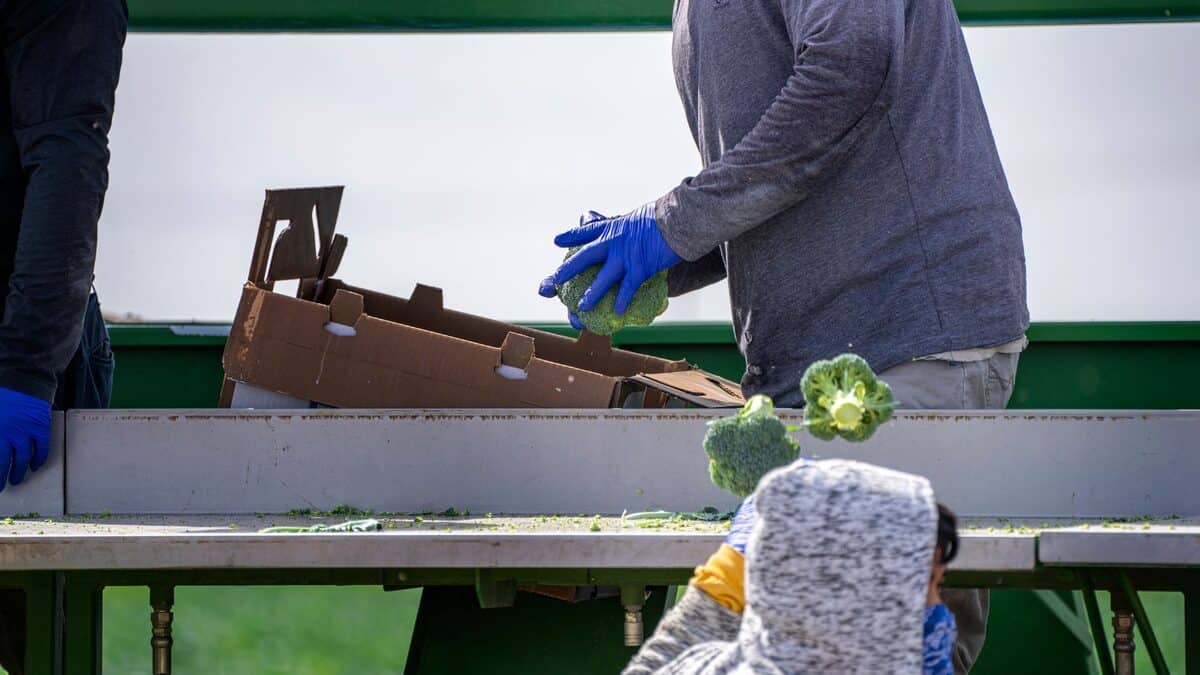
Steve Ostroff, former Acting Commissioner of the FDA and former Deputy Director of the CDC's National Center for Infectious Diseases, told Bloomberg's 'The Close' that the cyclospora outbreak became widely known in early to mid-July even though reports suggest federal agencies were aware of the problem weeks before public disclosure.
The question that matters most in a foodborne illness outbreak is rarely the pathogen. It is the calendar. On Bloomberg's "The Close," Steve Ostroff — former Acting Commissioner of the U.S. Food and Drug Administration and former Deputy Director of the National Center for Infectious Diseases at the Centers for Disease Control and Prevention — walked through the public awareness timeline of the current cyclospora outbreak with host Romaine Bostick, and the gap he described is the part investors and food companies will be arguing over for months.
The outbreak became widely known in early to mid-July. But reports cited in the discussion suggest government agencies had knowledge of the issue weeks before that public disclosure. That gap — between internal awareness and public notification — is the fulcrum on which regulatory criticism, congressional interest and eventual litigation tend to turn.
Why a Few Weeks of Silence Carries Outsized Consequences
Cyclospora is a parasite spread through contaminated food and water, and it does not behave like the bacterial pathogens most consumers know by name. Symptoms can take a week or more to appear, and the illness can last for weeks without treatment. That long lag is exactly what makes early detection valuable and late disclosure costly: by the time a cluster of cases is confirmed and traced, the implicated produce has usually been eaten, discarded or already moved through several links of the distribution chain.
That is the operational reason a delay matters. The institutional reason is different. Federal health agencies generally hold public announcements until they believe they can name a specific food vehicle, on the argument that a vague warning damages entire commodity categories and teaches consumers to ignore future alerts. The counter-argument, which Ostroff's framing of the timeline invites, is that consumers cannot protect themselves from a product they have not been told about, and that waiting for certainty transfers risk from the government to the dinner table.
Both positions have been fought over repeatedly in American food safety policy. What is new each time is the specific set of weeks in question — and here, per the account given to Bloomberg Markets, the disclosure came in early to mid-July while awareness inside government reportedly predated it.
The Two Agencies, and Which One Owns Which Question
Ostroff's résumé is unusually well matched to this particular controversy because it spans both institutions involved, and their roles are frequently conflated in public commentary.
- The CDC is the disease detective. It collects case reports from state health departments, looks for clusters that exceed the expected background rate, interviews patients about what they ate and determines whether scattered illnesses constitute a single outbreak.
- The FDA is the product regulator. Once a suspect food is identified, it traces lots back through distributors, packers and growers, inspects facilities and water sources, and decides whether a recall or an import alert is warranted.
The handoff between those two functions is where timelines slip. A cluster can sit in surveillance data for weeks while epidemiologists work out whether it is real, and the regulator cannot act on a food vehicle it has not been handed. Any accounting of "who knew what and when" therefore has to separate the moment the CDC saw an unusual signal from the moment the FDA had a traceable product — and from the moment either told the public. Those are three different dates, and conflating them is how these disputes get muddy.
Where the Financial Exposure Sits
It is worth being precise about what has and has not been established. The material available here identifies the pathogen, the public disclosure window and the allegation of prior agency knowledge. It does not name a producer, a packer, a retailer or a specific commodity. Anyone assigning corporate blame at this stage is working ahead of the facts.
The material available here identifies the pathogen, the public disclosure window and the allegation of prior agency knowledge.
What can be said is where the pressure lands once a vehicle is named. Fresh produce supply chains are thin-margin and highly consolidated at the packing and distribution layer, so a single implicated grower can pull a large number of retail and restaurant brands into the story. The costs that follow a confirmed link tend to arrive in a predictable order: destroyed inventory, then lost category sales as consumers avoid the commodity regardless of brand, then legal claims from identified patients, then the slower drag of remediation and re-inspection. Grocers and quick-service chains typically recover the fastest, because they can substitute suppliers; the grower and the packer often cannot.
The disclosure-delay question adds a second layer. If it is established that agencies had actionable information earlier, plaintiffs' lawyers gain a narrative about preventable illnesses, and companies that were kept in the dark alongside the public gain a partial defense. That is why the timeline is not merely a governance story.
Broad Market Backdrop Was Quiet
None of this registered as a macro event. U.S. benchmarks closed modestly lower on Tuesday, Aug. 11, 2026: the SPDR S&P 500 ETF Trust (NYSEARCA: SPY) finished at $770.56, down 0.32% from its prior close of $773.03, after trading between $769.20 and $774.61. The Invesco QQQ Trust (NASDAQ: QQQ) ended at $718.45, off 0.34%, and the SPDR Dow Jones Industrial Average ETF (NYSEARCA: DIA) closed at $537.28, also down 0.32%. Those figures are as of the 20:00 GMT close.
The uniformity of those three declines is itself informative. A food safety story with named corporate defendants and a large recall can move consumer staples and restaurant shares noticeably; an outbreak still without a public product vehicle moves nothing at the index level. That may change abruptly if a traceback names a supplier.
What Would Move This Story Forward
Three developments would turn the timeline dispute from commentary into consequence.
- A named food vehicle. Until the FDA identifies a commodity and a supplier, there is no recall to price and no defendant to sue.
- A documentary record of internal dates. Congressional letters, inspector general reviews and freedom-of-information releases are the usual routes by which "agencies knew weeks earlier" becomes a specific, dated chronology.
- A change to notification policy. The durable outcome of past disclosure fights has been procedural — earlier interim advisories, faster traceback requirements, more granular lot-level record-keeping. Any of those raises compliance costs across the fresh produce chain, whether or not a single company is ever blamed.
For now, the honest summary is narrow: a former head of the FDA who also ran infectious disease work at the CDC has publicly flagged a gap between when the government knew and when the public was told about a cyclospora outbreak that surfaced in early to mid-July. Everything with a dollar sign attached comes later.
Key facts
- Public awareness: Cyclospora outbreak became widely known early to mid-July 2026
- Allegation: Reports suggest federal agencies knew of the issue weeks before disclosure
- Source of comment: Steve Ostroff, ex-FDA Acting Commissioner and ex-CDC NCID Deputy Director, on Bloomberg's 'The Close'
- Market backdrop: SPY closed at $770.56, -0.32%, as of 20:00 GMT Aug 11, 2026
Frequently asked questions
What is cyclospora?
Cyclospora is a microscopic parasite transmitted through food or water contaminated with feces. Symptoms typically include prolonged watery diarrhea, cramping and fatigue, and can take about a week to appear after exposure. Because the incubation period is long and the illness can persist for weeks, outbreaks are often identified only after the implicated food has left the market.
What did Steve Ostroff say about the outbreak?
Speaking with Romaine Bostick on Bloomberg's 'The Close,' Ostroff discussed the public awareness timeline of the cyclospora outbreak. He noted the outbreak became widely known in early to mid-July, while reports suggested government agencies had knowledge of the issue weeks before it was publicly disclosed.
Who is Steve Ostroff?
Ostroff is a former Acting Commissioner of the U.S. Food and Drug Administration and a former Deputy Director of the National Center for Infectious Diseases at the Centers for Disease Control and Prevention. That combination gives him direct experience of both the disease surveillance side and the product regulation side of a foodborne outbreak investigation.
Has any company or food product been named?
No producer, packer, retailer or specific commodity has been identified in the material available. Until the FDA completes a traceback and names a food vehicle, there is no recall to assess and no corporate exposure that can be quantified. Assigning blame to any named company at this stage would be premature.
Why does the disclosure timeline matter financially?
If agencies are shown to have had actionable information weeks earlier, it strengthens claims that illnesses were preventable, which raises litigation risk and increases the likelihood of tighter notification and traceability rules. Those rules add compliance cost across the fresh produce supply chain even for companies never linked to the outbreak.
Did the story affect stock markets?
Not measurably. On Aug. 11, 2026, the SPDR S&P 500 ETF closed at $770.56, down 0.32%; the Invesco QQQ Trust closed at $718.45, down 0.34%; and the SPDR Dow ETF closed at $537.28, down 0.32%. The near-identical declines indicate a broad, mild pullback rather than sector-specific food safety pressure.
Sources
- Fmr. FDA, CDC Official on Cyclospora, Food Safety Issues — Bloomberg Markets
Photo: Mark Stebnicki · Pexels Licence — source