Carmignac Manager Flags Food Inflation as Bonds' Unpriced Risk
Carmignac Gestion's Marie-Anne Allier argues bond markets have absorbed the energy shock but not the food one, and sees a supply squeeze landing within six to twelve months.
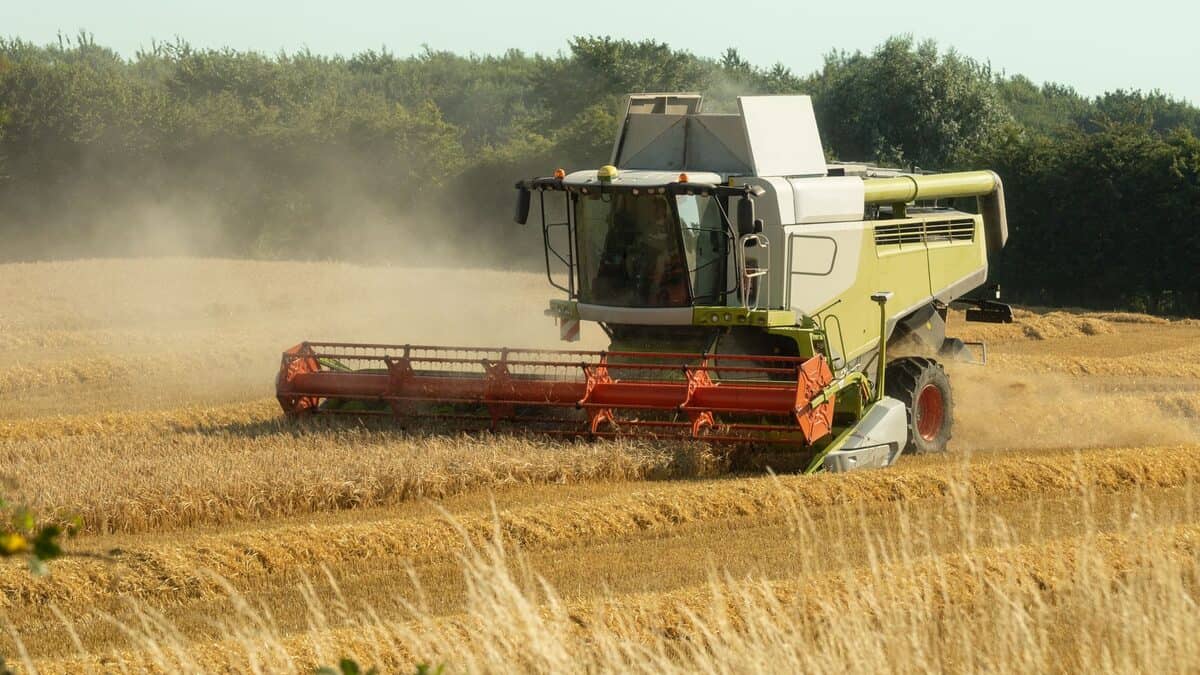
Marie-Anne Allier, fixed income fund manager at Carmignac Gestion, said energy price pressure is largely priced into bond markets but a food price supply shock within the next six to twelve months is not, citing poor harvests, disrupted Ukrainian grain exports and El Nino volatility.
Bond investors have spent this year rebuilding their inflation assumptions around energy. According to Marie-Anne Allier, fixed income fund manager at Carmignac Gestion, that work is largely done — and it is the wrong thing to be worrying about now.
Speaking to Bloomberg Markets, Allier said much of the negative impact from higher oil, gas and energy prices is already reflected in bond prices, along with the resulting shift in rate expectations: fewer cuts, and in her view the possibility of hikes in both the United States and Europe. The unpriced risk, she argued, is food.
Why food is treated as the afterthought
Energy is the inflation input markets are trained to watch. It has a deep, liquid futures curve, it feeds directly into breakeven inflation rates, and every desk can map a barrel price onto a headline CPI print within minutes. Geopolitical tension involving Iran — which Allier cited as a factor in the current setup — moves oil first and everything else second.
Food behaves differently. It arrives with a lag, it is driven by weather and logistics rather than by a single benchmark price, and central bankers have historically waved it through as a supply-side shock that monetary policy cannot address. That combination is exactly what makes it a candidate for being underpriced: the transmission is slow enough that positioning does not adjust until the pass-through is visible on supermarket shelves.
Allier's case rests on three overlapping supply problems. Adverse weather has hit harvests. The conflict between Russia and Ukraine continues to disrupt Ukrainian grain exports, removing a major source of low-cost calories from global trade. And El Nino carries the potential for further volatility in growing conditions. Her timeline is a new supply shock in food prices within the next six to twelve months.
What a food shock does to a bond portfolio
The mechanics matter more than the label. A supply-driven food shock lifts headline inflation while leaving core measures relatively untouched, which splits central banks between the mandate they write down and the expectations they actually manage. If households start extrapolating from grocery bills — historically the most salient prices in any consumer basket — the shock stops being transitory in practice, whatever the models say.
For fixed income, that produces the least comfortable combination available: sticky headline inflation without the demand strength that would normally justify higher yields on growth grounds. Long-dated nominal bonds carry the risk. Inflation-linked bonds carry the hedge, but only if breakevens have not already moved — and Allier's point is precisely that they have not, at least not for this component.
It also complicates the rate path she describes. Markets that have already conceded fewer cuts still tend to assume the direction of travel is eventually downward. A second, unrelated inflation impulse landing six to twelve months out would push that reversal further away and, in her framing, keep hikes on the table on both sides of the Atlantic.
Equities held their ground while the argument played out
The immediate market reaction was muted, which is consistent with a thesis about something not yet priced. As of the last trade at 19:59 GMT on 11 August 2026, the S&P 500 tracker (NYSEARCA: SPY) traded at $770.45, down 0.33% from the previous close of $773.03, inside a day range of $769.20 to $774.61. The Nasdaq 100 fund (NASDAQ: QQQ) was at $718.42, off 0.34% from $720.87. The Dow tracker (NYSEARCA: DIA) sat at $537.29, down 0.32% from $538.99.
The immediate market reaction was muted, which is consistent with a thesis about something not yet priced.
Three headline benchmarks moving within roughly a third of a percentage point of each other, all lower, all in narrow intraday ranges, is the profile of a market waiting rather than repricing. Nothing in that tape suggests investors are positioning for a food-led inflation surprise. That is not evidence Allier is wrong; it is the condition her argument requires.
How to test the claim rather than take it
An assertion that something is "unpriced" is falsifiable, and investors can check it without a Bloomberg terminal-sized budget. The sequence to watch:
- Grain and oilseed futures curves. If wheat, corn and soybean forward prices are flat or in backwardation, the market is not discounting a supply squeeze. A shift into contango on the deferred contracts would be the first sign that Allier's thesis is being taken up.
- Export volumes out of the Black Sea. Ukrainian grain shipment tonnage is the cleanest single indicator of whether the disruption she cites is worsening or stabilising.
- Food components of CPI and HICP. Headline inflation that outpaces core, with food doing the work, is the confirmation print. Watch the gap rather than the level.
- Short-dated versus long-dated breakevens. A food shock should lift two-year inflation expectations faster than ten-year ones. If both move together, the market has decided the shock is not temporary — the outcome central banks fear most.
- Fertiliser and freight costs. Input and logistics prices lead crop prices. They tend to move before the agricultural complex does.
Who feels it beyond the bond desk
Food inflation is regressive in a way energy inflation only partly is. It lands hardest on lower-income households in developed markets and on import-dependent economies where staples dominate the consumer basket. That gives it a political dimension energy shocks acquire more slowly — subsidy programmes, export restrictions, and price caps are all faster responses to bread than to petrol, and each of them tends to make the underlying supply problem worse.
For corporates, the exposure runs through packaged food, grocery retail and restaurants, where input costs rise faster than menu and shelf prices can follow. Agricultural producers and fertiliser makers sit on the other side of the trade. For central banks, the awkwardness is that the tool they have — demand suppression — is a poor answer to a harvest failure, but the credibility cost of ignoring visible price rises is real.
The gap between the thesis and the tape
Allier is not forecasting a shock that has already begun to show up in prices. She is arguing that a set of identifiable supply constraints — weather, war, El Nino — will converge into one within a two-to-four-quarter window, and that bond markets have spent their attention budget on oil instead. The evidence for the second half of that claim is visible in a market that closed the session almost exactly where it opened it.
The next few grain reports, and the next divergence between headline and core inflation, will settle which half was right.
Key facts
- Who: Marie-Anne Allier, Fixed Income Fund Manager, Carmignac Gestion
- Core claim: Energy inflation is priced into bonds; food inflation is not
- Timeline: New food price supply shock within six to twelve months
- SPY (as of 19:59 GMT, 11 Aug 2026): $770.45, -0.33%
Frequently asked questions
What exactly did Marie-Anne Allier say about bond markets?
Allier, fixed income fund manager at Carmignac Gestion, said much of the negative impact from higher oil, gas and energy prices is already priced into bond markets, along with expectations of fewer rate cuts and potential hikes in the US and Europe. She identified food inflation as a risk not yet fully reflected in bond prices.
Why does she expect a food price shock?
She cited three overlapping supply factors: adverse weather conditions affecting harvests, continued disruption to Ukraine's grain exports arising from the conflict with Russia, and potential volatility from El Nino. Together she expects these to trigger a new supply shock in food prices within the next six to twelve months.
How does food inflation differ from energy inflation for bond investors?
Energy prices feed quickly into headline inflation and breakeven inflation rates through liquid futures markets, so they get priced fast. Food prices move with weather and logistics, arrive with a lag, and are traditionally dismissed by central banks as supply-side noise — which is why positioning can adjust late.
What does a supply-driven food shock mean for interest rates?
It lifts headline inflation without necessarily lifting core inflation or demand, leaving central banks with a poor set of options. Demand suppression does not fix a harvest failure, but ignoring visible price rises risks inflation expectations. Allier's view is that it keeps rate hikes on the table in both the US and Europe.
How did equity markets trade on the day of her comments?
As of the last trade at 19:59 GMT on 11 August 2026, SPY was at $770.45, down 0.33% from a previous close of $773.03. QQQ traded at $718.42, down 0.34%, and DIA at $537.29, down 0.32%. All three moved in narrow intraday ranges.
How can an investor check whether food inflation is really unpriced?
Watch grain and oilseed futures curves for a move into contango on deferred contracts, Black Sea export tonnage, the gap between headline and core inflation driven by food components, and whether short-dated inflation breakevens rise faster than long-dated ones. Fertiliser and freight costs typically lead crop prices.
Sources
- Unpriced Food Inflation Threatens Volatile Bond Market — Bloomberg Markets
Photo: Mirko Fabian · Pexels Licence — source