Popeyes Posts 45% Same-Store Growth at Jubilant Foodworks
Jubilant Foodworks says its Popeyes chain grew like-for-like sales 45% last quarter while Domino's stays pinned to a 5–7% target — a two-engine story with very different margin maths.
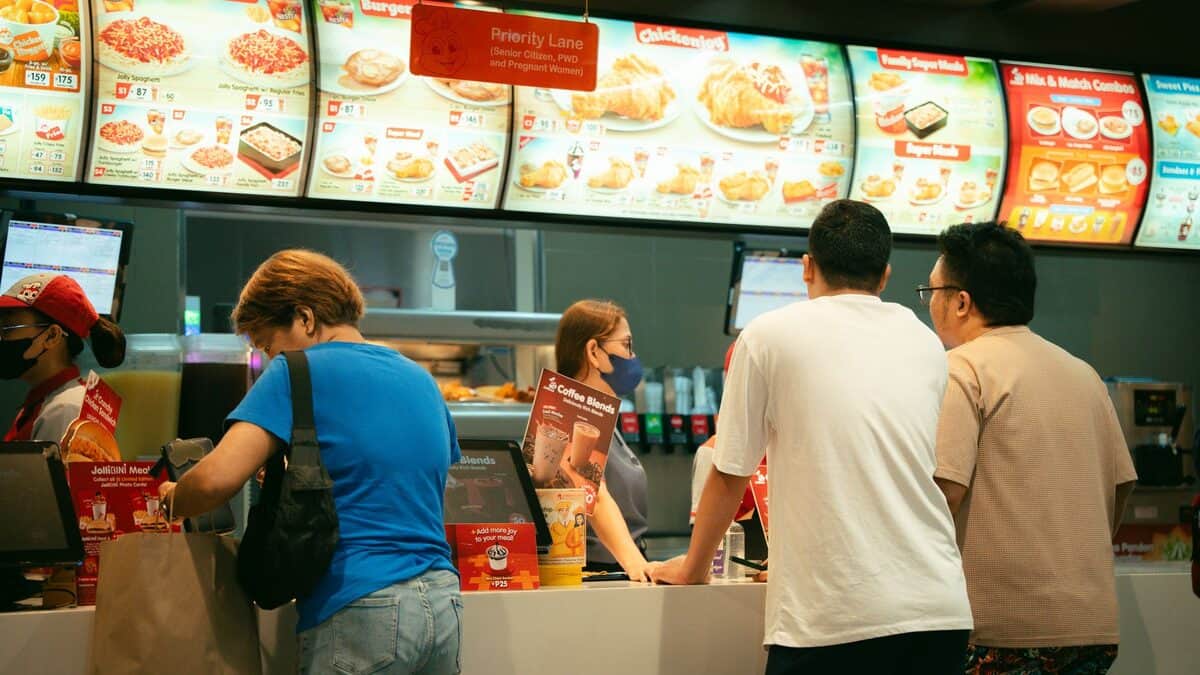
Jubilant Foodworks Ltd (BOM: 533155) told its Q1 2027 earnings call that Popeyes delivered 45% like-for-like growth in India while management reaffirmed confidence in 5–7% like-for-like growth for Domino's, which is facing cost headwinds.
Jubilant Foodworks Ltd (BOM: 533155), the Indian operator that holds the master franchise for Domino's Pizza and Popeyes in its home market, used its first-quarter fiscal 2027 earnings call to draw a sharp line between its two brands. Popeyes grew like-for-like sales 45%. Domino's, the far larger business, is being held to a management target of 5–7% like-for-like growth while absorbing cost pressure.
Like-for-like — often shortened to LFL, and used interchangeably with same-store sales — strips out the effect of new openings. It compares only restaurants that were trading in both periods. That makes it the cleanest read on whether existing outlets are pulling in more customers or charging more, rather than whether the company simply built more of them.
Two brands, two completely different growth maths
A 45% LFL number is extraordinary in any restaurant system, and it needs to be read for what it is: a young, small base compounding fast. Popeyes entered India recently enough that its comparable store set is still thin, geographically concentrated, and lapping periods when brand awareness was low. Growth rates of that magnitude are a property of small numbers as much as of execution.
Domino's is the opposite case. It is a national network with more than a decade of density in Indian cities, and every percentage point of like-for-like growth there is fought for through delivery times, value bundles, app conversion and menu price. Management's stated confidence in a 5–7% band, as reported by GuruFocus, is the more consequential guidance for the group, simply because Domino's carries the revenue weight.
The framing management chose — Popeyes as a "second growth engine" — is a familiar one in franchised quick service. The mature brand funds the network, the newer brand supplies the growth narrative. The risk in that framing is that it invites investors to price the small brand's growth rate against the big brand's earnings base.
Why the cost headwinds land hardest on Domino's
Cost pressure in a pizza system runs through cheese, wheat, packaging, energy and store labour, and it hits differently depending on where a brand sits in its life cycle. A scaled network like Domino's has limited room to take price without denting order counts, because its value proposition is built on predictable price points and delivery speed. When input costs rise faster than menu prices, restaurant-level margin compresses even if like-for-like sales stay inside the target band.
Popeyes, by contrast, is still in the phase where new-store contribution and rising throughput can outrun cost inflation on the revenue line. But that comes with its own drag: pre-opening costs, marketing spend to build awareness, and supply-chain investment that is amortised over too few outlets. High-growth chicken formats frequently show strong top-line comparables and thin or negative segment profitability at the same time. Both things can be true in one quarter.
For anyone reading the print, the questions that matter are whether Domino's like-for-like growth was driven by transactions or by average ticket, and whether Popeyes' 45% came with an improvement in store-level contribution margin or merely with more revenue passing through the same unprofitable base. Those splits, not the headline growth rate, determine what the second engine is actually worth.
An Indian consumption story, quoted in rupees
Jubilant Foodworks trades on the BSE under the code 533155, and its results are reported in Indian rupees against an Indian consumer cycle. That distance matters for US-based readers: the company's fortunes turn on urban Indian discretionary spending, delivery aggregator economics, dairy and wheat prices in India, and competitive intensity from local and international quick-service rivals — not on the American consumer.
Jubilant Foodworks trades on the BSE under the code 533155, and its results are reported in Indian rupees against an Indian consumer cycle.
The reporting calendar is a second source of confusion. India's fiscal year runs from April, so what the company calls Q1 2027 covers a period that falls inside the 2026 calendar year. A US investor scanning for "Q1 2027 results" in mid-2026 is not looking at a forecast; it is a reported quarter under a different fiscal convention.
Where the tape sat when the call was digested
The earnings call commentary reached the wires while US markets had closed on a firm note. As of the last trade on Thursday, 13 August 2026 at 20:00 GMT, the S&P 500 tracker (NYSEARCA: SPY) finished at $777.88, up 0.70% from a prior close of $772.49, having traded between $774.11 and $779.37. The Nasdaq 100 tracker (NASDAQ: QQQ) closed at $732.07, a gain of 1.16% against $723.70. The Dow tracker (NYSEARCA: DIA) ended at $537.91, up 0.14%.
That backdrop is context, not causation. Nothing in a firm US session speaks to how Indian investors price a Mumbai-listed restaurant operator. It does, however, describe the risk appetite in which the global consumer-growth trade was being read — a market leaning toward growth, with the technology-heavy index outpacing the industrial average by a wide margin on the day.
What to watch in the quarters ahead
Three things will decide whether the two-engine story holds together.
- Whether the 5–7% Domino's band survives contact with costs. Reaffirming a like-for-like target is easy; delivering it while defending restaurant margin is the test. Watch for any shift in language from confidence in the range to confidence in the lower half of it.
- The rate of Popeyes store additions versus its comparable base. As the comparable set widens, a 45% LFL figure mechanically becomes harder to repeat. A gentler but still double-digit number on a bigger base would be a stronger signal than another spike.
- Segment-level profitability disclosure. The single most useful thing management can publish is Popeyes' contribution margin trend. Until that is visible, the second engine is a revenue story rather than an earnings one.
There is a broader pattern here that extends well beyond one Indian franchisee. Across global quick service, operators with a mature core brand have been bolting on younger, faster-growing formats — often in chicken — to supply the growth their legacy networks can no longer generate organically. It works when the new format eventually clears its own cost of capital. It disappoints when the parent keeps funding awareness spend for a brand that never reaches the density needed to make unit economics work. Jubilant Foodworks has put the question in front of investors with a 45% number. The answer arrives in the margin lines of the next several quarters.
Key facts
- Popeyes like-for-like growth: 45% in Q1 FY2027
- Domino's LFL target: 5–7%, management reaffirmed confidence
- Listing: Jubilant Foodworks Ltd, BOM: 533155 (BSE, Mumbai)
- US market close, 13 Aug 2026 20:00 GMT: SPY $777.88 (+0.70%); QQQ $732.07 (+1.16%)
Frequently asked questions
What did Jubilant Foodworks report for Popeyes?
On its first-quarter fiscal 2027 earnings call, Jubilant Foodworks said Popeyes delivered 45% like-for-like growth. Management described the chicken brand as a second growth engine alongside Domino's, the much larger business it operates in India under a master franchise arrangement.
What is like-for-like growth and why does it matter?
Like-for-like, or same-store, growth compares sales only at outlets that were open in both the current and prior period. It excludes the boost from new openings, so it shows whether existing restaurants are attracting more customers or charging higher prices rather than whether the chain simply built more stores.
What is management guiding for Domino's in India?
Jubilant Foodworks said it remains confident of achieving 5 to 7 percent like-for-like growth for Domino's. That is the more consequential number for the group's results because Domino's is the far larger network by revenue, even though its growth rate is much lower than Popeyes'.
Why is Domino's facing cost headwinds?
Pizza economics run on cheese, wheat, packaging, energy and store labour. A mature, price-sensitive network has limited scope to raise menu prices without losing order volume, so when input costs rise faster than pricing, restaurant-level margin compresses even if like-for-like sales stay inside the target range.
Does a 45% growth rate make Popeyes profitable?
Not necessarily. Fast like-for-like growth off a small, young store base can coexist with weak segment profitability, because pre-opening costs, brand-awareness marketing and supply-chain investment are spread over too few outlets. Contribution margin disclosure, not the headline growth rate, shows whether the brand earns money.
Why is a quarter labelled Q1 2027 being reported in 2026?
India's fiscal year begins in April, so the first fiscal quarter of the year labelled 2027 falls within the 2026 calendar year. The figures are reported results for a completed period, not forecasts, despite the year in the label appearing to sit in the future.
Sources
- Jubilant Foodworks Ltd (BOM:533155) (Q1 2027) Earnings Call Highlights: Popeyes Surges 45% LFL, ... — GuruFocus
Photo: Kenneth Surillo · Pexels Licence — source