JBS Says US Beef Restructuring Has Yet to Lift Margins
JBS NV told investors its US beef unit has not yet seen gains from restructuring, pinning margin recovery on that plan and returning Mexican cattle supply as a new CEO takes over.
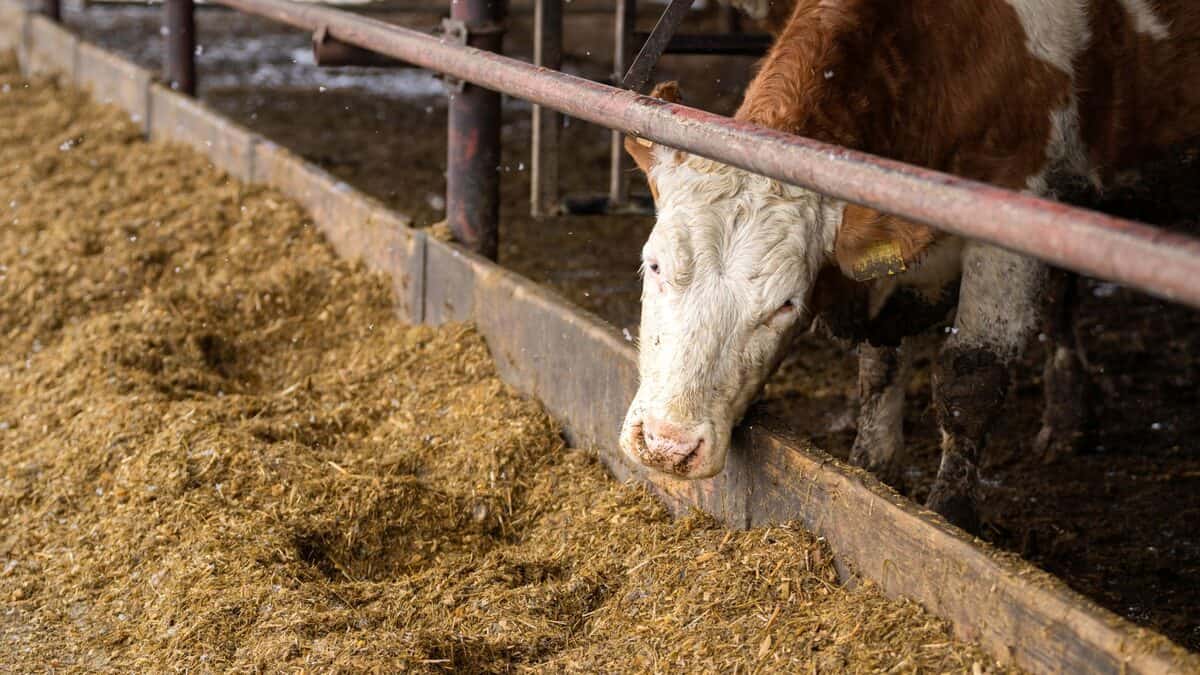
JBS NV said its core US beef business has yet to benefit from an internal restructuring plan, though the company expects that effort and a renewed flow of Mexican cattle to eventually help meatpacking margins; shares traded at $13.22, down 1.42%, as of 16:30 GMT on Aug. 11, 2026.
JBS NV (NYSE: JBS) has put a name to the problem investors already suspected: the restructuring plan aimed at its biggest business, US beef, has not yet shown up in the numbers. The company said its main US beef operation is still waiting to feel the benefit, while pointing to that internal overhaul and a renewed flow of Mexican cattle as the two levers it expects to eventually widen meatpacking margins.
The message arrived alongside a leadership handover, with a new chief executive publicly pledging continuity rather than a change of direction. For a company that only recently gained a New York listing, that combination — same strategy, unfixed margin problem, new person at the top — is the whole story for shareholders to weigh.
What the market did with the news
The shares were not rewarded. JBS traded at $13.22 as of 16:30 GMT on Aug. 11, 2026, down 1.42% from the prior close of $13.41, having swung between $12.70 and $13.51 during the session. That intraday range is wide relative to the day's move, which suggests holders were actively repositioning rather than simply drifting.
The move also stands out against a quiet broad market. The S&P 500 proxy (SPY) was at $771.84, off 0.15%, the Nasdaq 100 proxy (QQQ) at $718.63, down 0.31%, and the Dow proxy (DIA) at $538.63, lower by 0.07%. On a day when the major benchmarks barely moved, a decline of that size in a single large-cap protein name reads as company-specific rather than macro.
Why beef packing margins are the pressure point
Meatpacking is a spread business. A processor buys live cattle, converts them into boxed beef and sells the output; the profit is the gap between what it pays for the animal and what it receives for the meat, less the cost of running the plant. When cattle are scarce, ranchers hold pricing power, live animal costs climb, and the packer's spread compresses — sometimes to nothing — regardless of how efficient the plant is.
That is the mechanic behind JBS's statement. A restructuring plan can attack the controllable side of the equation: plant configuration, labor productivity, overheads, how many shifts a facility runs. What it cannot do is manufacture cattle. So management is effectively telling the market that self-help alone will not restore US beef margins on its own timetable, and that supply has to cooperate.
Mexican cattle as the swing factor
The reference to a renewed flow of Mexican cattle is the part of the story that sits outside JBS's control entirely. Cross-border feeder cattle are an important marginal source of supply for US feedlots, and when that channel is interrupted, the shortfall lands directly on the price American packers pay. JBS's framing — that restored flows would eventually aid margins — is an acknowledgment that the recovery timeline is partly a function of animal health policy and border decisions, not corporate execution.
For investors, that creates an awkward analytical problem. The company has named a catalyst it cannot deliver. Progress is therefore best tracked through observable evidence rather than management commentary: whether cross-border volumes actually resume, whether US cattle supply loosens, and whether the packing segment's reported margin begins to move in the direction management has promised. Until one of those changes, the restructuring benefit remains a stated expectation.
Continuity as a deliberate signal
New chief executives usually arrive with a plan to differentiate themselves. Pledging continuity is a choice, and in this case a defensible one. JBS's strategy has been built around scale, geographic diversification across proteins and geographies, and the step up in capital markets standing that came with its New York listing. Tearing that up while the flagship US business is still under margin pressure would compound uncertainty rather than reduce it.
Tearing that up while the flagship US business is still under margin pressure would compound uncertainty rather than reduce it.
The trade-off is that continuity removes the option of a reset narrative. There is no new strategic story for the market to buy into, no restructuring 2.0 to price in. The stock's performance from here depends on the existing plan working and on external cattle supply improving — a leaner, more testable proposition than a fresh strategic vision, but also one with fewer places to hide if the margin recovery keeps slipping.
As Bloomberg Markets reported, JBS frames both the restructuring and the Mexican cattle flow as eventual contributors to meatpacking margins rather than immediate ones. The word "eventually" is doing a lot of work in that sentence, and the market appears to have noticed.
What the diversified model still offers
One argument in the company's favor is that US beef, while the largest business, is not the only business. A global protein platform spanning multiple species and multiple countries can offset weakness in one spread with strength in another, because the cost drivers are not identical: grain costs, herd cycles and consumer demand differ by protein and by region. Investors who own JBS for that diversification are, in effect, betting that the rest of the portfolio can carry the group while the beef cycle turns.
The bear case is simpler. If the biggest unit is structurally squeezed and the fix depends on cattle availability, then earnings quality is hostage to a supply cycle that historically takes years, not quarters, to correct. Herd rebuilding requires ranchers to hold back females from slaughter, which tightens near-term supply before it eases it — a well-known feature of the cattle cycle that can make the pain worse before it gets better.
The near-term checklist
- Whether cross-border Mexican cattle volumes actually resume and at what pace.
- Reported margin in the US beef segment, and whether management moves from "eventually" to a specific quarter.
- Evidence that restructuring savings are landing in the packing business rather than being absorbed by higher cattle costs.
- Whether the incoming CEO's continuity pledge survives the first full reporting cycle intact.
- Whether the shares can hold above the $12.70 intraday low set on Aug. 11.
None of that resolves quickly. What JBS has done is set the terms of its own scorecard: restructuring plus cattle supply equals better margins. The company has told the market what to measure. The measuring starts now.
Key facts
- Share price: JBS NV (NYSE: JBS) $13.22, -1.42%, as of 16:30 GMT Aug. 11, 2026
- Intraday range: $12.70–$13.51, prior close $13.41
- Company position: US beef, its main business, has yet to benefit from restructuring
- Stated margin levers: Restructuring plan plus renewed flow of Mexican cattle
Frequently asked questions
What did JBS say about its US beef business?
JBS NV said its main business of US beef has not yet benefited from a restructuring plan. The company added that it expects both that restructuring effort and a renewed flow of Mexican cattle to eventually help its meatpacking margins, framing the improvement as a future outcome rather than something already visible in results.
How did JBS shares react?
JBS NV traded at $13.22 as of 16:30 GMT on Aug. 11, 2026, down 1.42% from the prior close of $13.41, with an intraday range of $12.70 to $13.51. The decline came on a day when the S&P 500, Nasdaq 100 and Dow proxies were all only marginally lower, suggesting a company-specific reaction.
Why do Mexican cattle matter to a US meatpacker?
Cross-border feeder cattle are a marginal supply source for US feedlots. Meatpacking profit is the spread between what a processor pays for live cattle and what it receives for boxed beef, so when supply tightens, live animal costs rise and the packer's margin compresses. Restored Mexican flows would ease that supply pressure.
What does the new CEO pledging continuity mean?
It means the incoming chief executive intends to keep the existing strategy rather than launch a new direction. That reduces uncertainty during a period of margin pressure in the flagship US beef unit, but it also removes the possibility of a fresh strategic narrative for investors to price in, leaving the outcome dependent on the current plan working.
What is a meatpacking margin?
It is the gap between the cost of live cattle a processor buys and the revenue from the boxed beef and by-products it sells, after plant operating costs. Because cattle prices are set by supply cycles largely outside a packer's control, the margin can compress sharply even when a plant is running efficiently.
What should investors watch next at JBS?
Key markers include whether Mexican cattle volumes genuinely resume, whether the reported US beef segment margin starts improving, whether restructuring savings show up rather than being absorbed by higher cattle costs, and whether management replaces the word "eventually" with a specific timeframe. Share behavior around the $12.70 intraday low is also a technical reference point.
Sources
- JBS Seeks US Margin Recovery With New CEO Pledging Continuity — Bloomberg Markets
Photo: Lukas Kosc · Pexels Licence — source