Hertz Drops 9% as Pershing Square Confirms Exit
Shares of the car-rental group slid to $2.54, down 9.29%, after Pershing Square's chief investment officer disclosed the firm had exited its Hertz position entirely.
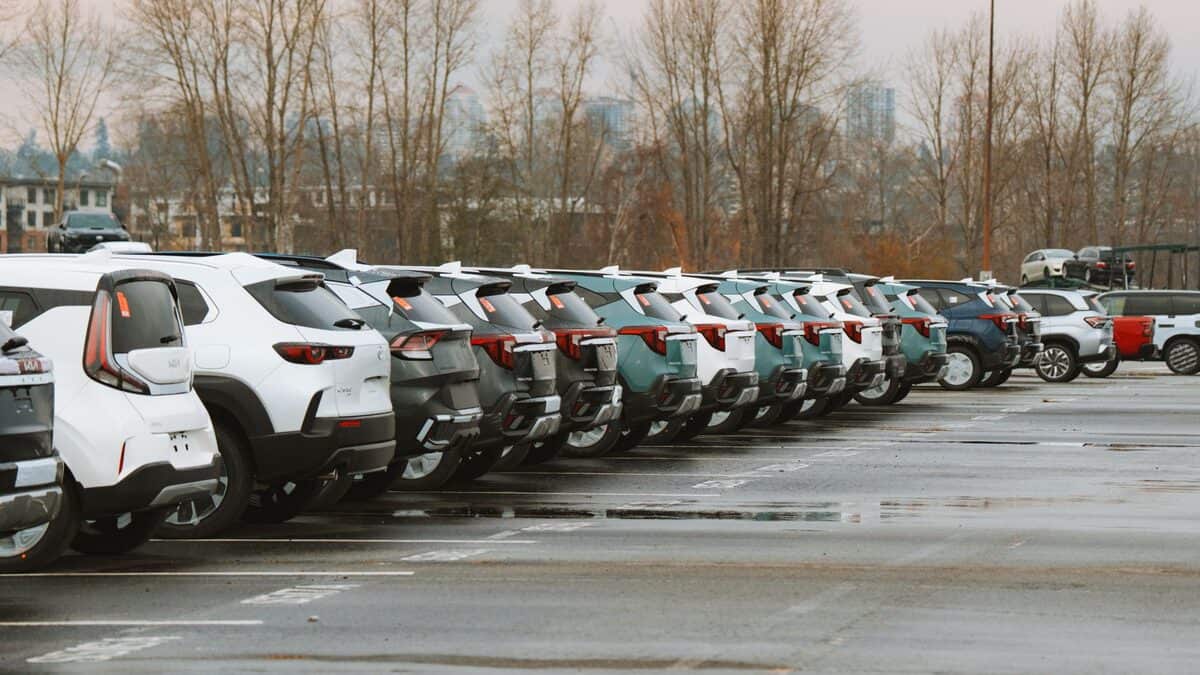
Hertz Global Holdings Inc (NASDAQ: HTZ) fell 9.29% to $2.54 on Thursday after Pershing Square's chief investment officer said Bill Ackman's firm has sold its entire stake in the car-rental company.
Hertz Global Holdings Inc (NASDAQ: HTZ) lost close to a tenth of its market value on Thursday after Pershing Square Inc.'s chief investment officer said the asset manager had sold its stake in the car-rental company. The stock was quoted at $2.54, down 9.29% from Wednesday's close of $2.80, as of 18:50 GMT, with an intraday range of $2.45 to $2.94.
The disclosure, reported by Bloomberg Markets, ends one of the more closely watched activist positions in the US consumer sector. Bill Ackman's fund had been the marquee institutional name attached to Hertz, and for a stock trading in low single digits, that association carried weight well beyond the size of any single block of shares.
A single sentence knocked a tenth off the price
The day's trading tells the story of how much of Hertz's valuation rested on who owned it rather than what it earned. The shares touched $2.94 at the high and $2.45 at the low — a spread that, on a stock priced near $2.50, represents an unusually wide swing for one session. Volume-driven moves of this kind in low-priced equities tend to be amplified by the absence of a large valuation cushion: there is little room between the market price and zero, so headline risk translates directly into percentage terms.
The market backdrop makes the decline look worse still. The S&P 500, via SPY, was up 0.69% at $777.79. The Nasdaq 100 tracker QQQ gained 1.32% to $733.22, and the Dow 30 proxy DIA edged up 0.07% to $537.55. On a broadly green day, Hertz was moving hard in the opposite direction — a clean read that the selling was company-specific and event-driven rather than a function of risk appetite.
What the Ackman association was worth
Activist ownership functions as a form of implied insurance for shareholders in a distressed or turnaround situation. The presence of a well-capitalised, publicly vocal investor signals two things to the rest of the market: that someone with resources has examined the balance sheet and concluded the equity is worth owning, and that management is under observation. Neither of those signals survives an exit.
Pershing Square did not, per the lead, disclose the proceeds or the timing of the sale beyond the confirmation that the position is gone. What matters to the remaining holder base is the removal of the floor that a committed institutional buyer provides. Investors who bought Hertz partly because Ackman had bought it now hold the stock on its own merits — the rental fleet, the depreciation cycle, the debt stack and the pricing environment for daily and corporate rentals.
That is a materially different investment case, and Thursday's reaction suggests the market is repricing accordingly rather than treating the news as noise.
Why car rental remains a hard place to be a shareholder
Vehicle rental is a capital-intensive business with an unusual sensitivity to the used-car market. Operators buy fleets, run them for a period, then sell them; the residual value realised on disposal flows straight through the income statement. When used-vehicle prices are firm, depreciation expense is low and margins look excellent. When they soften, the same fleet becomes a liability that has to be written down. That cyclicality is the reason rental equities so often trade at low multiples even in good years.
Vehicle rental is a capital-intensive business with an unusual sensitivity to the used-car market.
Layer on the leverage typically used to finance fleets, and the equity sits far down the capital structure. For a stock at $2.54, small changes in fleet economics or refinancing costs can swing the equity value by a large proportion. This is precisely the profile that attracts activists — asymmetric upside if the operational fix works — and precisely the profile that punishes remaining holders when an activist decides the fix is not coming, or not coming quickly enough.
None of that is a judgment on Pershing Square's reasoning, which the disclosure did not spell out. Funds exit for portfolio reasons as often as for thesis reasons: concentration limits, better ideas elsewhere, a decision to recycle capital. The market rarely gets that distinction on the day.
What to watch from here
Three things will determine whether $2.54 marks a floor or a way station.
- Regulatory filings. Quarterly institutional holdings disclosures will eventually show the shape of the exit and whether other large holders moved in the same direction or the opposite one. A single seller is one story; a cluster is another.
- Any commentary from Pershing Square on rationale. The chief investment officer confirmed the sale. Whether the firm elaborates on why — operational disappointment versus capital reallocation — will shape how much of Thursday's move sticks.
- Hertz's own updates. Fleet size, per-unit revenue, residual values on vehicle disposals and progress on debt are the metrics that now have to carry the story unassisted. With no activist name attached, the equity trades on execution.
For traders, the immediate technical question is whether the stock holds the $2.45 intraday low. For longer-horizon investors, the harder question is the one the exit forces: was the position ever about the business, or about the investor who owned it? Thursday's 9.29% decline against a rising market is an uncomfortable answer.
Stocks at this price level also carry structural risks that larger-cap names do not — reduced index eligibility, thinner institutional coverage, and greater exposure to the mechanics of short interest and options positioning. Each of those can magnify moves in both directions, which is why the range between $2.45 and $2.94 opened as wide as it did on a single piece of ownership news.
Key facts
- Hertz (NASDAQ: HTZ): $2.54, -9.29%, as of 18:50 GMT Thu 13 Aug 2026
- Previous close: $2.80
- Intraday range: $2.45–$2.94
- Market backdrop: SPY +0.69%, QQQ +1.32%, DIA +0.07%
Frequently asked questions
How far did Hertz shares fall?
Hertz Global Holdings Inc (NASDAQ: HTZ) traded at $2.54 as of 18:50 GMT on Thursday, 13 August 2026, down 9.29% from the previous close of $2.80. The stock ranged between $2.45 and $2.94 during the session, an unusually wide swing for a stock priced in low single digits.
Who sold the Hertz stake?
Pershing Square Inc., the asset management firm associated with Bill Ackman, sold its stake in Hertz. The firm's chief investment officer confirmed the disposal, according to Bloomberg Markets. The size of the position and the timing of the sale were not detailed in the disclosure.
Why does an activist exit hurt a share price so much?
An activist holder acts as implied insurance for other shareholders: it signals that a well-resourced investor has examined the balance sheet and that management is being watched. When the activist leaves, that signal disappears and the equity trades purely on operating fundamentals, which for a low-priced, leveraged name can mean a sharp repricing.
Did the wider market fall on the same day?
No. The S&P 500 tracker SPY rose 0.69% to $777.79, the Nasdaq 100 proxy QQQ gained 1.32% to $733.22, and the Dow 30 fund DIA added 0.07% to $537.55. Hertz's decline ran against a broadly higher tape, indicating the selling was specific to the company's ownership news.
What makes car rental equities volatile?
Rental operators buy large vehicle fleets, run them, then sell them. The resale or residual value realised on disposal flows straight into earnings, so shifts in used-vehicle pricing move margins sharply. Fleets are typically debt-financed, leaving the equity low in the capital structure and highly sensitive to small changes in fleet economics.
What should investors watch next in this story?
Three items: quarterly institutional holdings filings that reveal the shape of the exit and whether other large holders followed; any further commentary from Pershing Square explaining its rationale; and Hertz's own operating updates on fleet size, per-unit revenue, vehicle disposal values and debt reduction progress.
Sources
- Hertz Shares Fall After Ackman’s Pershing Sells Stake in Firm — Bloomberg Markets
Photo: Luke Miller · Pexels Licence — source