DEKRA Wins GM Approval for GMW3097 Emissions Testing
DEKRA's Plymouth, Michigan test center can now certify parts against General Motors' GMW3097 electromagnetic compatibility standard — a small credential with real weight in a supplier validation queue crowded…
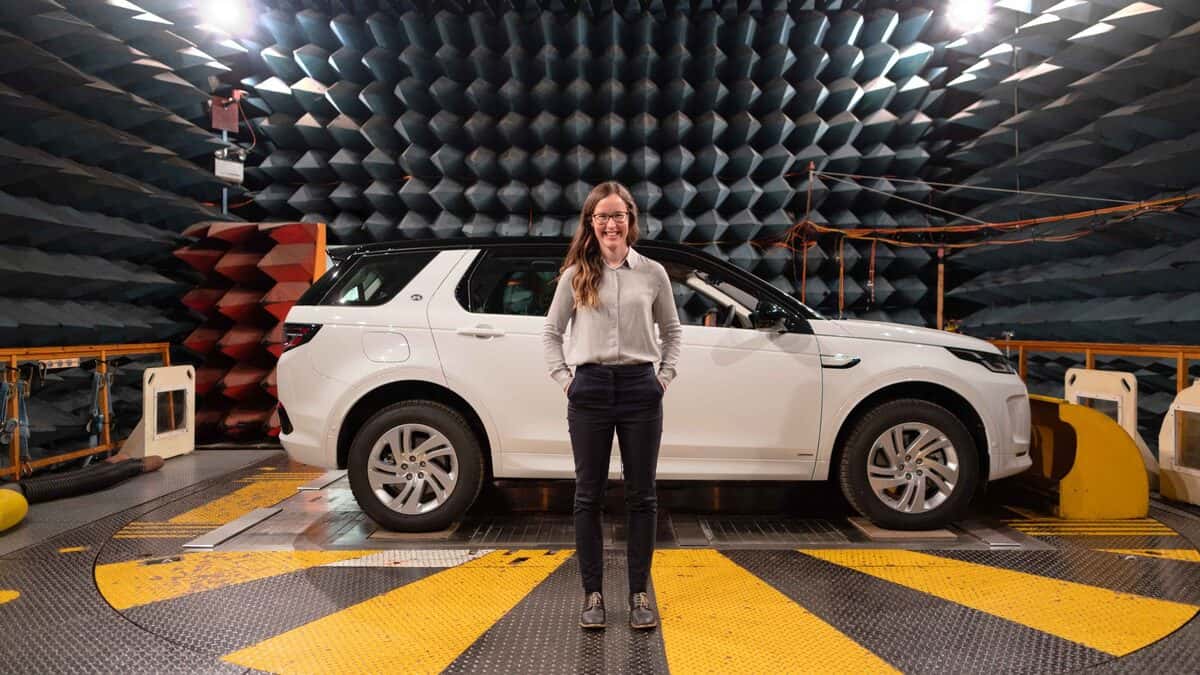
DEKRA said its Automotive Test Center of Excellence in Plymouth, Michigan has been approved to run testing to General Motors' GMW3097 electromagnetic compatibility standard, announced Aug. 12, 2026, as GM shares traded at $86.90, down 2.74% on the day.
DEKRA said on Aug. 12, 2026 that its Automotive Test Center of Excellence in Plymouth, Michigan has been approved to perform testing in accordance with General Motors Co (NYSE: GM) GMW3097 electromagnetic compatibility standard. The announcement, carried over GLOBE NEWSWIRE and picked up by Business Insider Markets, is the kind of item that never moves a share price and yet sits directly on the critical path of a vehicle program.
Electromagnetic compatibility — EMC — is the discipline of making sure an electronic component neither emits interference that disrupts its neighbours nor falls over when its neighbours emit interference at it. A door module that scrambles the radio, a battery management system that misreads a sensor when a fast charger is nearby, a camera that flickers under a cell tower: these are EMC failures. GMW3097 is General Motors' in-house specification governing how that behaviour is measured and what limits a part must respect before it is allowed into a GM vehicle.
Why an automaker's own standard is the gate that matters
Suppliers often assume international EMC standards are the finish line. In automotive they are the starting point. Each automaker layers its own specification on top, with its own test setups, its own emission limits, its own pass criteria and — crucially — its own list of laboratories whose results it will accept. A supplier can hold a stack of generic EMC reports and still be told the data is not admissible for a GM program.
That is what the GMW3097 approval changes for DEKRA. The Plymouth laboratory is not simply capable of running the test sequences; it is recognised as a place where those sequences produce results GM will take at face value. For a Tier 1 or Tier 2 electronics supplier working on a GM award, that distinction is the difference between a validation report and a rework loop.
What it does to the supplier validation queue
EMC chambers are a bottleneck by construction. A shielded anechoic chamber with the instrumentation to sweep a component across a wide frequency range is expensive, physically large, and booked in blocks. When a program slips, the chamber slot slips with it, and the next supplier in line waits. Every additional approved facility inside a given automaker's ecosystem widens that neck.
Geography compounds the effect. Plymouth sits inside metropolitan Detroit, within short driving distance of the engineering offices where GM component decisions are made and where much of the domestic supply base keeps its validation staff. Shipping a prototype harness across an ocean and back for a retest costs days that a launch calendar does not have. A locally approved lab lets an engineer sit in the control room, watch the failure happen, and adjust the shielding the same afternoon.
The wider context is electrification. A vehicle with high-voltage traction inverters, DC fast-charging hardware, onboard chargers and dozens of networked controllers is a far noisier electromagnetic environment than a comparable combustion vehicle, and it carries more electronics that must survive that noise. Every one of those parts needs an EMC file. Demand for approved chamber time has moved in one direction, and approvals like this one are how automakers add capacity without building it themselves.
The competitive position DEKRA is buying
Automotive testing, inspection and certification is a scale business. The commercial logic is straightforward: the more automaker-specific approvals a laboratory holds, the more of a supplier's total validation programme it can absorb under one roof, and the less that supplier wants to split work across vendors. A lab that can only do generic EMC competes on price. A lab that is approved to GMW3097 competes on access.
DEKRA is naming the Plymouth site an "Automotive Test Center of Excellence," which signals an intent to consolidate capability there rather than treat EMC as a standalone service line. The GM approval is one credential in what is typically a collected set — each one incremental, each one hard to reverse once granted, and each one a reason for a supplier to route the next program to the same address.
GM shares slid on the day, for unrelated reasons
General Motors traded at $86.90 as of 19:58 GMT on Aug. 12, 2026, down 2.74% from the previous close of $89.35, with a day range of $86.81 to $89.16. That put GM at the weak end of a mixed session: the S&P 500, via SPY, was at $772.32, up 0.23%; the Nasdaq 100 proxy QQQ was at $723.46, up 0.70%; and the Dow 30 tracker DIA was at $537.11, down 0.03%.
None of that is a verdict on a laboratory approval, and it should not be read as one. A supplier-side testing credential does not register in an automaker's valuation on the day it is announced. GM's stock moves on volumes, pricing, tariffs, and the capital intensity of its electric vehicle programs — none of which the lead addresses. The market data here establishes only where the shares were trading when the announcement crossed.
What to watch from here
None of that is a verdict on a laboratory approval, and it should not be read as one.
Three things would confirm the approval is doing commercial work rather than sitting in a brochure. First, additional automaker-specific approvals at the same Plymouth site: the value of a test center compounds with the length of its accepted-standards list. Second, any expansion of chamber capacity or frequency coverage at the facility, which would suggest DEKRA is seeing bookings it cannot currently serve. Third, movement on the emerging side of EMC — wireless charging, high-voltage architectures, and the interference profiles that come with advanced driver assistance sensors — where standards are still being tightened and where laboratories that get there first tend to keep the work.
For suppliers, the practical takeaway is narrower and more immediate: there is now another approved door in Michigan for GMW3097 work, and in a validation calendar measured in weeks, the location of the chamber is not a detail.
Key facts
- GM share price: $86.90, -2.74%, as of 19:58 GMT Aug. 12, 2026 (NYSE: GM)
- Approval: GM's GMW3097 electromagnetic compatibility standard
- Facility: DEKRA Automotive Test Center of Excellence, Plymouth, Michigan
- Announced: Aug. 12, 2026, via GLOBE NEWSWIRE
Frequently asked questions
What is GMW3097?
GMW3097 is General Motors' internal electromagnetic compatibility specification. It defines how automotive electronic components are tested for the interference they emit and their ability to keep working when exposed to interference from other systems, along with the limits a part must meet before GM will accept it into a vehicle program.
Why does an automaker-specific approval matter if international EMC standards exist?
International standards set a baseline, but each automaker adds its own specification, test setups and pass criteria, and maintains a list of laboratories whose data it accepts. A supplier can hold generic EMC reports and still be told the results are not admissible for that automaker's program, forcing a retest at an approved lab.
What did DEKRA announce?
DEKRA said its Automotive Test Center of Excellence in Plymouth, Michigan received approval to perform testing in accordance with General Motors' GMW3097 electromagnetic compatibility standard. The announcement was dated Plymouth, Michigan, Aug. 12, 2026 and distributed through GLOBE NEWSWIRE.
How did General Motors stock trade on the day of the announcement?
General Motors was at $86.90 as of 19:58 GMT on Aug. 12, 2026, down 2.74% from a previous close of $89.35, within a day range of $86.81 to $89.16. The move was not attributable to the testing announcement, which concerns a third-party laboratory rather than GM's own financial results.
Why is electrification increasing demand for EMC testing?
Electric and electrified vehicles carry high-voltage inverters, onboard chargers, fast-charging hardware and large numbers of networked controllers. That creates a noisier electromagnetic environment and more components that must both tolerate and limit interference, so each vehicle program generates more EMC test files and more competition for approved chamber time.
Why does the Plymouth, Michigan location matter?
Plymouth sits within metropolitan Detroit, close to General Motors engineering operations and much of the domestic supply base. Proximity lets supplier engineers attend tests in person and correct failures the same day, avoiding the shipping time and calendar slippage that comes with sending prototypes to distant laboratories for retesting.
Sources
- DEKRA Expands Automotive EMC Testing Capabilities with General Motors GMW3097 Approval — Business Insider Markets
Photo: ThisIsEngineering · Pexels Licence — source