

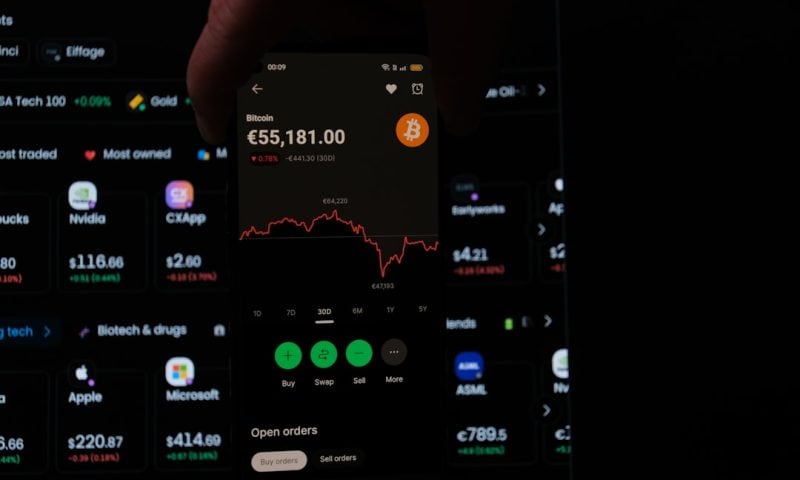
While retail traders fumble through endless technical indicators, sophisticated investors have quietly mastered one tool that consistently delivers actionable insights across global markets: the relative strength index. This momentum oscillator, developed by J. Welles Wilder Jr. in 1978, has evolved from a simple overbought-oversold indicator into a sophisticated weapon in the arsenal of professional money managers worldwide.
The relative strength index measures the speed and magnitude of price changes, oscillating between 0 and 100 to reveal when assets may be due for reversals. Traditional wisdom suggests buying when the RSI drops below 30 (oversold) and selling above 70 (overbought). However, institutional players have discovered far more nuanced applications that generate alpha in today’s complex market environment.
Smart money managers recognize that the relative strength index performs differently across asset classes and market conditions. In trending markets, successful traders adjust their RSI thresholds—perhaps using 20 and 80 instead of the standard 30 and 70—to avoid premature exits from powerful moves. During the recent cryptocurrency surge, hedge funds applying modified RSI strategies captured significantly more upside than those relying on conventional settings.
The global nature of modern markets has revealed another edge for sophisticated RSI users. Currency fluctuations, geopolitical events, and cross-market correlations create unique opportunities when the relative strength index diverges across related assets. For instance, when the RSI of emerging market ETFs shows oversold conditions while developed market indices remain neutral, seasoned investors often view this as a rotation signal rather than a simple buy opportunity.
Multi-Timeframe RSI Analysis Separates Professionals from Amateurs
Professional traders never rely on a single timeframe when interpreting the relative strength index. They simultaneously monitor RSI readings across multiple periods—from intraday charts to monthly views—creating a comprehensive momentum picture. This approach helps distinguish between temporary pullbacks in strong trends and genuine reversal signals.
Consider how institutional investors approached the technology sector’s volatility patterns. By analyzing the relative strength index across daily, weekly, and monthly timeframes, they identified when apparent “oversold” conditions on shorter timeframes occurred within larger bearish trends. This multi-dimensional analysis prevented costly mistakes that trapped less sophisticated traders in falling knives.
The integration of RSI with other technical tools has become increasingly sophisticated among professional money managers. Rather than using the relative strength index in isolation, they combine it with volume analysis, moving averages, and support-resistance levels to create robust trading frameworks. When RSI divergence aligns with key technical levels and unusual volume patterns, the probability of successful trades increases dramatically.
Global Markets Demand Adaptive RSI Strategies
Different markets exhibit unique RSI characteristics that smart money exploits systematically. Commodity markets often show extended periods where the relative strength index remains in extreme territories, requiring modified interpretation. Energy stocks during supply disruptions, precious metals during currency crises, and agricultural commodities during weather events can maintain “overbought” or “oversold” RSI readings for weeks.
Forex markets present another arena where sophisticated RSI application generates consistent profits. Currency pairs often exhibit strong trending behavior that can keep the relative strength index in extreme zones for extended periods. Professional traders use RSI slope analysis and rate-of-change calculations to identify when these trends might finally exhaust themselves.
The emergence of global market connectivity has created new RSI opportunities through inter-market analysis. When the relative strength index of crude oil diverges from energy stock indices, or when bond RSI patterns contradict equity market signals, experienced traders recognize these as potential paradigm shifts worth investigating.
Modern portfolio managers also leverage the relative strength index for sector rotation strategies. By ranking sectors based on their RSI readings and momentum characteristics, they systematically shift allocations toward areas showing technical strength while reducing exposure to technically deteriorating sectors. This quantitative approach removes emotional bias while maintaining exposure to market momentum.
The relative strength index remains a cornerstone tool for sophisticated investors precisely because it adapts to changing market conditions while providing consistent insights into momentum shifts. As global markets become increasingly interconnected and volatile, those who master advanced RSI applications continue to extract alpha from opportunities that escape conventional analysis. The indicator’s enduring relevance stems not from its simplicity, but from the depth of insights it provides to those skilled enough to interpret its signals across multiple dimensions and timeframes.