

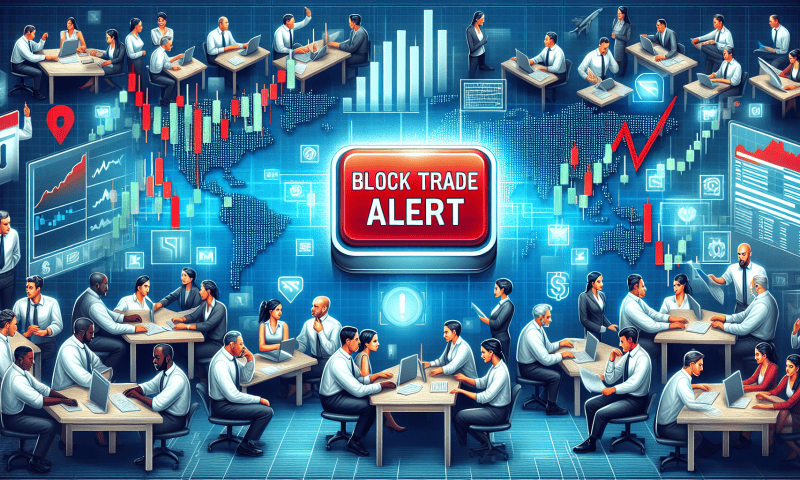
When institutional investors move millions of dollars in single transactions, they leave unmistakable footprints in the market. These massive trades, captured through sophisticated block trade alert systems, offer retail investors and traders a rare glimpse into the strategic positioning of Wall Street’s biggest players. Understanding these signals can mean the difference between riding major market waves and missing them entirely.
A block trade alert typically identifies transactions involving at least 10,000 shares or $200,000 in value, though many platforms set higher thresholds. These aren’t random purchases by individual investors checking their phones during lunch breaks. Instead, they represent calculated moves by pension funds, hedge funds, insurance companies, and other institutional giants managing billions in assets. When these entities shift their positions, markets often follow.
The predictive power of block trade alerts lies in their timing and concentration. Institutional investors rarely act on whims or social media tips. Their trades result from extensive research, insider knowledge of upcoming earnings, merger discussions, regulatory changes, or macroeconomic shifts that haven’t yet reached public consciousness. By the time news breaks publicly, these smart money players have already positioned themselves advantageously.
Consider the patterns that emerge when multiple block trade alerts cluster around specific sectors or individual stocks. A sudden surge of large-scale buying in semiconductor companies might precede positive earnings surprises or favorable government policy announcements. Similarly, concentrated selling pressure revealed through block trade alerts often anticipates negative developments weeks before they become apparent to the broader market.
Technology has democratized access to this once-exclusive information. Modern trading platforms and financial data services now provide real-time block trade alert notifications, allowing individual investors to shadow institutional moves. These systems scan thousands of transactions per minute, filtering out routine trades to highlight the truly significant ones that suggest directional bias.
The effectiveness of following block trade alerts becomes particularly pronounced during periods of market uncertainty. When headlines create confusion and retail sentiment swings wildly, institutional traders often maintain their disciplined, research-driven approach. Their block trades cut through market noise, providing clarity about where sophisticated money is flowing regardless of popular opinion or media narratives.
However, interpreting block trade alerts requires nuance beyond simply copying every large transaction. Context matters enormously. A massive sale might represent profit-taking after a successful run rather than bearish sentiment. Portfolio rebalancing, tax considerations, or risk management requirements can drive trades that contradict short-term market outlook. Successful traders learn to distinguish between trades that signal conviction and those driven by operational necessities.
The velocity of institutional trading has accelerated significantly with algorithmic systems and electronic execution platforms. Modern block trade alert systems must process information at unprecedented speeds to remain relevant. By the time alerts reach individual investors, markets may have already begun responding to the underlying institutional activity, though secondary effects often create additional opportunities.
Regional and global market connections amplify the importance of block trade alerts in an interconnected financial system. Large-scale movements in U.S. equities influence international markets, commodity prices, and currency valuations. Traders monitoring block trade alerts gain insights not just into individual stock directions but into broader market themes that ripple across asset classes and geographic boundaries.
The institutional money represented in block trade alerts operates with longer time horizons than typical retail trading. While individual investors might hold positions for days or weeks, institutions often build positions over months and hold them for quarters or years. This patient capital approach means that block trade alerts can signal extended trends rather than short-term fluctuations, offering particularly valuable guidance for swing traders and long-term investors willing to align their strategies with institutional flows.