

Driven by artificial intelligence (AI) euphoria, the stock market has been on fire over the last two months. Since its recent low on March 30, the S&P 500 (^GSPC+0.22%) is up 18%; in that same period, the Dow Jones Industrial Average (^DJI+0.72%) is up 12% and the Nasdaq Composite (^IXIC+0.20%) has climbed 28%.
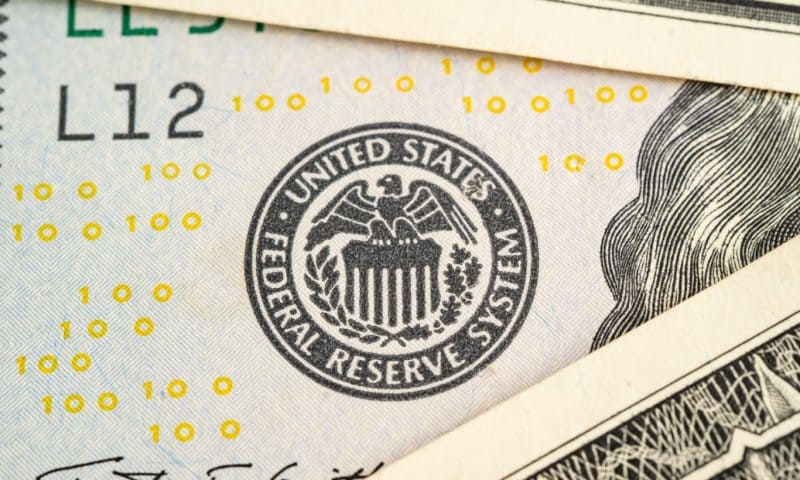
But the new chairman of the Federal Reserve may be about to complicate that.
While Kevin Warsh, confirmed to lead the Fed this month, is largely seen as a dove — that is, someone pushing for rate cuts — his market-friendly approach is much more nuanced than many investors assume.
Warsh has ideas about the Fed’s balance sheet that could have major ramifications for the stock market — and could bring the Trump bull market to an end.
Warsh wants to shrink the Fed’s balance sheet — and that could push rates higher
When people think about the Fed, they usually assume it has one main tool up its sleeve to influence the American economy: setting interest rates.
But the Fed also has a balance sheet — a pretty big one — that, depending on how it’s managed, can have an even stronger influence on interest rates.
The Fed’s portfolio, made up of things like Treasuries and mortgage-backed securities, is worth roughly $6.7 trillion. That is up from about $800 billion before the 2008 financial crisis. When the Fed expands this portfolio through quantitative easing (QE), it floods the market with cash and helps drive down rates.
However, when the opposite happens — quantitative tightening (QT) — money is sucked out of the system, and interest rates tend to rise.
Warsh has been critical of what he’s called a “bloated” balance sheet and has been a vocal proponent of reducing it to pre-2008 levels, in what could be a more aggressive QT cycle than we’re used to.
During the recent confirmation process, Warsh softened some of his language around his plans for QT. It’s not clear how much he will push for it during his tenure. Still, if he does, the Fed could cut the short-term benchmark rate most investors pay attention to while effectively raising long-term rates and borrowing costs across the economy.
Why that matters for this rally
The rally since March is just the latest in what has proven to be a remarkably resilient bull market. However, rising costs could be the factor that finally derails this AI-fueled train.
That’s because, for one, higher rates tend to reduce the market’s risk appetite and slow equity investment. When safe Treasuries start offering competitive yields, money tends to rotate away from riskier, more speculative investments, and stretched multiples start to come back to Earth.
But beyond this, the gargantuan AI build-out is extraordinarily capital-intensive, with companies pouring hundreds of billions into data centers and AI infrastructure. And while the cash flows of companies like Amazon and Alphabet are driving most of this, the build-out is increasingly reliant on debt.
Higher rates mean higher borrowing costs, which can completely change the calculus for many of these deals. If the cost of capital rises enough, some of those investments stop making financial sense, and the spending cycle that has driven so much of this market’s enthusiasm could cool off.
So if Warsh follows through and starts pulling the balance sheet down toward pre-2008 levels, you could end up in a strange situation where even if the Fed is cutting short-term rates — and that’s a big if now, considering the current inflation situation — the rates that really matter for financing a data center start to climb.
And that is exactly what could bring the Trump bull market to an end.
Missed Nvidia in 2009? This Rare Signal Is Flashing Again
In 2009, a “Double Down” signal flashed for a little-known chipmaker called Nvidia. If you’d invested $5,000 then, you’d be sitting on $2,738,344 today.*
Now, for the first time in years, that same “Total Conviction” signal is flashing for a company 1/100th the size of Nvidia. It’s a key player in the $1.8 trillion space race, and with the stock recently sitting 20% off its highs, the window to get in early is closing fast.