

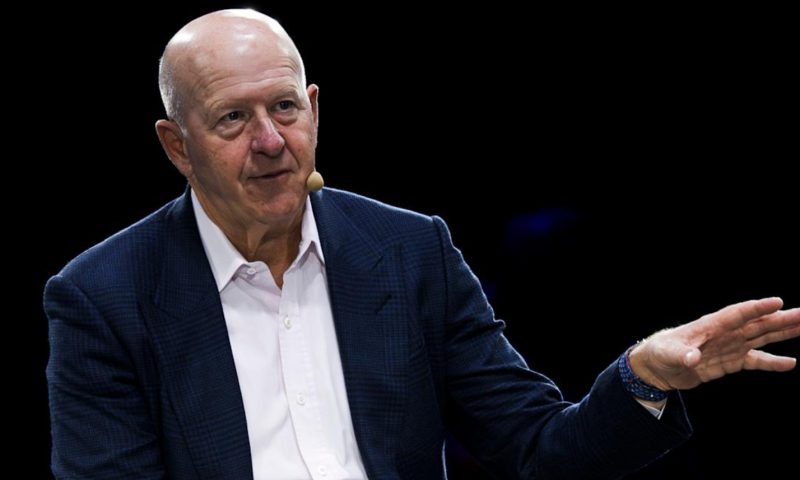
Goldman Sachs’ CEO David Solomon says he believes there’s enough “greed” from investors to absorb the shock of some of the world’s largest tech companies going public.
In an interview with CNBC’s Leslie Picker (1), Solomon was asked whether the markets could support the unprecedented wave of fundraising from AI firms as they prepare to launch their initial public offerings (IPOs).
According to reporting in Forbes, two factors are giving investors pause. First, AI infrastructure spending, such as on data centers that will take years to be approved and built, is skyrocketing. Secondly, that build-out is being financed with massive amounts of private credit. Economists warn that the U.S. economy might be becoming more fragile and unstable as a result, leaving it vulnerable to shocks (2). Since AI-heavy tech companies now make up a large portion (3) of the overall economy, this could pose a risk to the system as a whole. You may have heard it called the “AI bubble.”
Solomon isn’t concerned about an imminent burst. “There’s plenty of liquidity in the system if the world continues to remain as optimistic,” he told CNBC. “We are definitely in a moment where there’s more greed than there is fear.”
SpaceX, OpenAI and Anthropic look to list on the stock market
The comments come as some of the world’s biggest AI companies are set to go public. Anthropic, the maker of Claude, has confidentially filed for U.S. initial public offering (4) (IPO). The company did not disclose the size of its offering, but last raised $65 billion (5), bringing its valuation to $965 billion. According to CNBC reporting, its annual revenue is, by contrast, about $47 billion. It’s not yet profitable, but is getting close (6).
OpenAI, the maker of ChatGPT, was valued at $852 billion (7) at its last round of funding, and is reportedly expected to file in the coming weeks. And Elon Musk’s SpaceX, which now includes his AI company xAI, the company behind the chatbot Grok, is expected to begin trading in mid-June with a reported valuation of $1.75 trillion, though the figure has been called into question.
And the three tech giants are not alone. Other firms are also looking for billions of dollars to fund AI data centers, chips and the vast infrastructure needed to support the technology.
Goldman Sachs is playing a crucial role in several of these deals, which helps put Solomon’s confidence into context. Last month, the investment bank partnered with Anthropic (8) and other investment firms to create a new AI services company.
And while Solomon agrees the wave is unprecedented, he argues liquidity and record levels of wealth can support it — and that gains from AI will help fund taxes and new ventures.
The CEO did, however, acknowledge that this hunger on the part of investors could turn into something else.
Is this another dot-com bubble?
Greed can “turn into fear very quickly, but that doesn’t mean it will,” Solomon told CNBC. “Exuberance can go on for big periods of time. … There’s a good chance that we’re earlier in the cycle than later.”
While short-term excitement can push stock prices to unseen heights, it doesn’t guarantee they’ll stay high long-term. Take the dot-com bubble for example, when the tech-heavy Nasdaq index saw a five-fold increase between 1995 and 2000 (9). Tech startups capitalized on investor excitement about the newly minted World Wide Web, raising significant funds and going public. But when funds dried up, stocks collapsed. The Nasdaq fell by 75% in just two years.
However, today’s AI leaders are different from dot-com startups in some ways. They generate substantial cash flow even as they pour billions into AI expansion.
As a reassuring sign, Solomon pointed to Alphabet’s recent stock performance after announcing its plan for an $80 billion equity raise to fund AI compute infrastructure. Google’s parent company has seen its stocks more than double the past year, thanks to positive reaction towards its AI investments.
“The stock is trading very well,” Solomon told CNBC. “This is the first actual concrete data point for bringing something of this scale, and it’s encouraging.”