

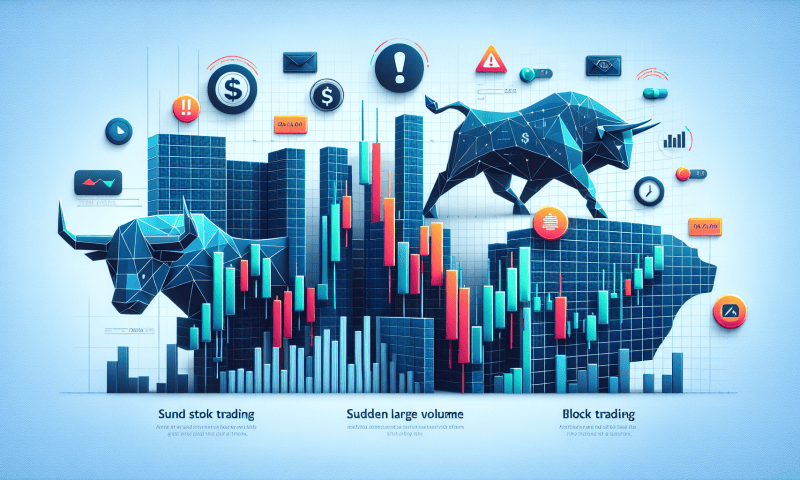
When institutional investors execute massive trades worth millions of dollars, they rarely announce their intentions to the market. Yet for active traders who know where to look, these significant moves leave unmistakable footprints. A block trade alert system serves as your window into the sophisticated world of institutional trading, revealing the large-volume transactions that often precede major price movements.
Block trades represent transactions involving substantial quantities of securities, typically 10,000 shares or more, executed away from public exchanges to minimize market impact. These trades occur through dark pools, private networks, or direct institutional arrangements. While institutions prefer this stealth approach to avoid telegraphing their strategies, the eventual reporting of these transactions creates valuable intelligence for informed traders.
The power of a block trade alert lies in its ability to identify unusual institutional activity before the broader market recognizes the trend. When a hedge fund accumulates 500,000 shares of a technology stock through multiple block transactions, or when a pension fund quietly divests a significant position, these actions reflect deep research and conviction that individual traders can leverage for their own decision-making.
Modern block trade alert systems analyze real-time market data to detect patterns indicative of large institutional transactions. Advanced algorithms identify unusual volume spikes, price movements outside normal parameters, and trading patterns that suggest coordinated institutional activity. These systems filter through millions of data points to surface the transactions most likely to represent significant institutional positioning.
The timing advantage provided by block trade alerts cannot be overstated. Institutional trades often occur days or weeks before the underlying catalyst becomes public knowledge. A pharmaceutical company might see unusual block trading activity before announcing clinical trial results, or a retail stock might experience institutional accumulation ahead of quarterly earnings that will surprise the market. Traders who recognize these patterns gain valuable lead time to position themselves accordingly.
Interpreting block trade data requires understanding the context surrounding each transaction. A block trade alert showing unusual selling activity in a financial stock might indicate concerns about upcoming regulatory changes, while accumulation in energy names could signal institutional expectations of commodity price increases. The key lies in combining block trade intelligence with fundamental analysis and market sentiment to form a complete picture.
Technology has democratized access to institutional trading intelligence that was once available only to well-connected Wall Street professionals. Real-time block trade alert platforms now provide retail traders with the same market intelligence used by professional money managers. These systems deliver notifications through mobile apps, email alerts, or direct integration with trading platforms, ensuring traders never miss significant institutional activity.
The most valuable block trade alerts often occur during periods of market uncertainty or ahead of significant corporate events. During earnings season, institutions position themselves based on proprietary research and management guidance not yet available to the public. Similarly, during market volatility, institutional rebalancing creates opportunities for traders who can identify which securities are experiencing unusual institutional flow.
Risk management becomes crucial when acting on block trade intelligence. While these alerts provide valuable insights into institutional thinking, they represent just one data point in a comprehensive trading strategy. Smart traders use block trade alerts to identify potential opportunities, then conduct their own analysis to determine appropriate position sizing and risk parameters.
The regulatory environment surrounding block trade reporting continues to evolve, with authorities seeking to balance market transparency with institutional needs for efficient execution. Recent regulatory changes have shortened reporting timeframes for certain large transactions, providing traders with more timely access to institutional trading data while maintaining market integrity.
For active traders seeking an edge in increasingly competitive markets, block trade alerts represent a powerful tool for identifying institutional money flow before it becomes obvious to the broader market. By monitoring these large-scale transactions and understanding their implications, traders gain access to the same market intelligence that drives institutional decision-making, creating opportunities to align their strategies with the smart money that consistently moves markets.