

Asian markets jumped on Monday as a resounding win for Japanese Prime Minister Sanae Takaichi whetted appetites for more reflationary policies, while there was widespread investor relief at a last-gasp rebound in U.S. chip stocks.
Bargain hunting in beaten-down momentum plays including silver also helped shore up sentiment, as did wagers of more policy easing from the U.S. Federal Reserve.
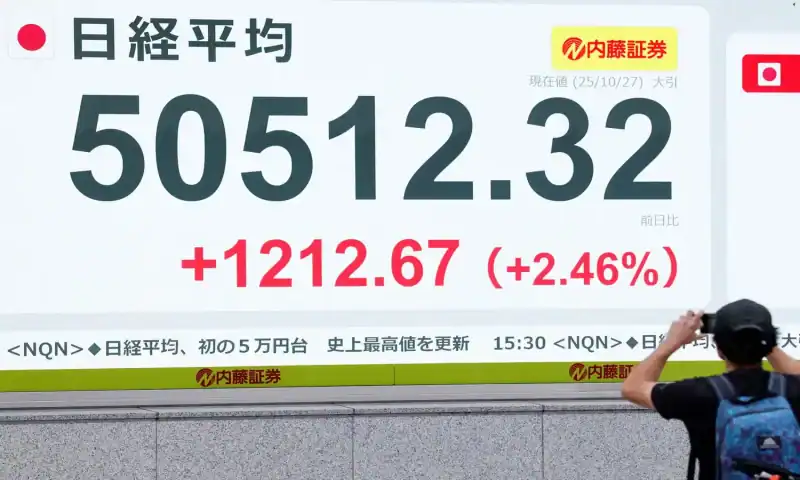
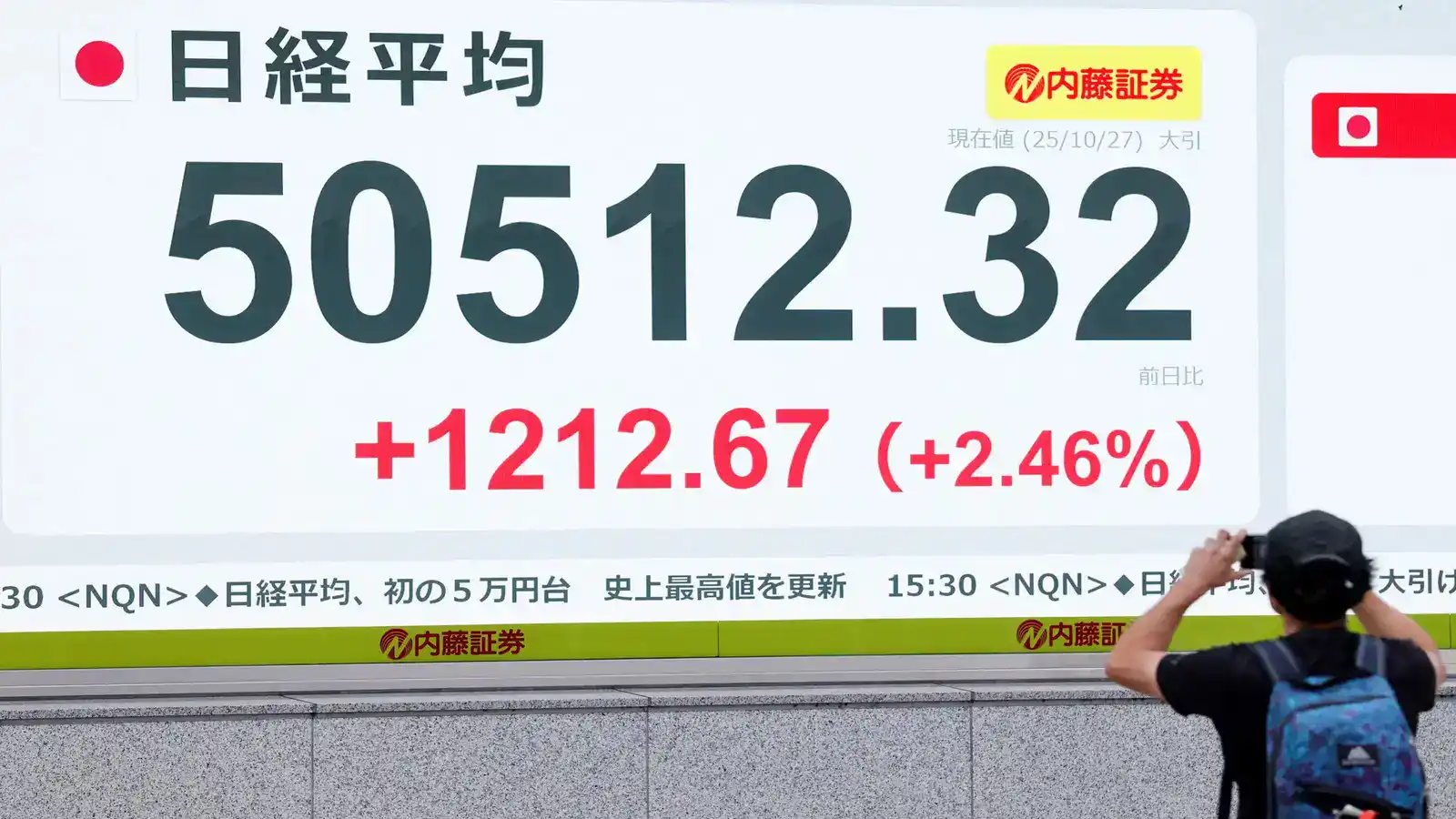
Japan’s Nikkei (.N225), opens new tab led the gains with a rise of 4.1% to all-time highs as the government’s decisive majority clears the way for more spending and tax cuts.
“The victory gives Takaichi a stable majority, enabling decisive action on fiscal stimulus, AI, semiconductors, energy security, and strategic reforms,” said Marc Jocum, a senior investment strategist at Global X ETFs Australia.
“Japan was long seen as a contrarian investment, but is now a reform story with meaningful momentum,” he added. “Political stability, improving returns on capital, domestic capital deployment and reasonable valuations all point in the same direction.”
The prospect of more borrowing, however, pushed two-year Japanese government bond yields up to their highest since 1996 at 1.3% .
MSCI’s broadest index of Asia-Pacific shares outside Japan (.MIAPJ0000PUS), opens new tab rose 2.1%, while South Korea’s tech-heavy index (.KS11), opens new tab climbed 3.8%.
Chinese blue chips (.CSI300), opens new tab rose 1.3%, ahead of inflation figures due on Wednesday that are expected to show a pullback in food prices and continued deflation in producer prices.
As for Europe, EUROSTOXX 50 futures firmed 0.3%, as did DAX futures , while FTSE futures rose 0.4%.
S&P 500 futures gained 0.1% and Nasdaq futures added 0.2%, having both bounced more than 2% on Friday to break a run of heavy losses.
Chip stocks saved the day with Nvidia (NVDA.O), opens new tab jumping almost 8%, while Advanced Micro Devices (AMD.O), opens new tab surged over 8% and Broadcom (AVGO.O), opens new tab rose 7%.
US DATA TO TEST FED WAGERS
Investors have already sold the yen in anticipation of Takaichi’s debt-funded expansionary policies, and the initial reaction was to take profits, pulling the dollar down 0.3% to 156.74 , some way from the recent peak at 159.45. Analysts assume a push toward 160.00 would likely draw threats of intervention from Tokyo.
The euro was a shade firmer at $1.1821 , having held to a tight range for the past week. Sterling was stuck at $1.3596, still plagued by political uncertainty amid speculation UK Prime Minister Keir Starmer could lose his job.